Deaf Dog Communication Signals For 2026
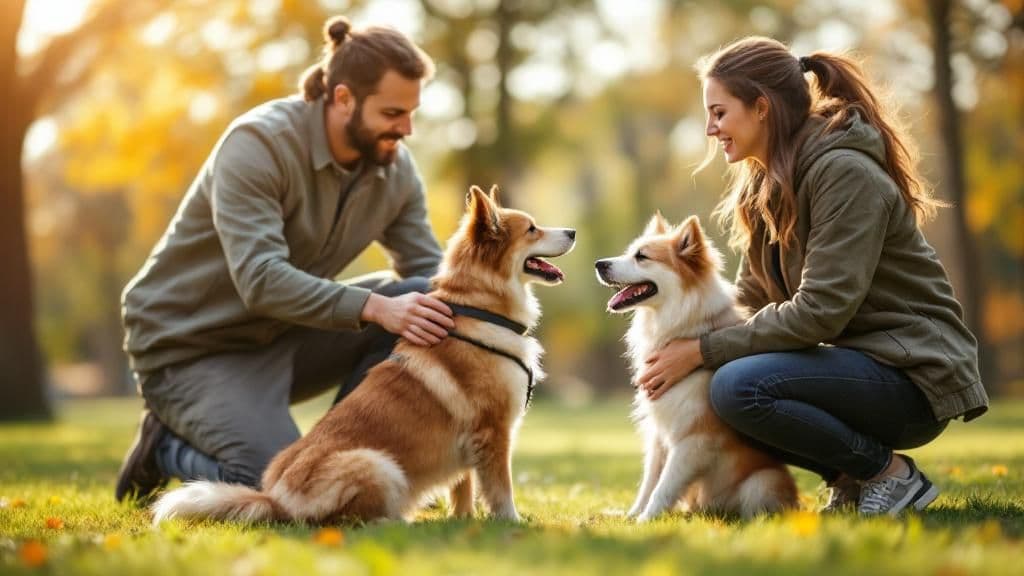
Teach your deaf or senior dog using modern hand signals for better communication and a stronger bond.
Teaching hand signals to deaf or senior dogs uses their natural body-language reading ability — dogs respond to visual cues even faster than verbal commands. Start with five essential signals: sit (closed fist rising), down (flat palm lowering), stay (open palm facing dog), come (arm sweeping toward body), and good dog (thumbs up).
Hey there. I'm Brad. If you've found your way to this article, chances are you're facing a new reality with your furry friend. Maybe those "come" calls at the park are being met with a confused stare instead of a joyful sprint. Perhaps your once obedient senior pup seems to be ignoring you more often. Or maybe you've welcomed a deaf dog into your home and are wondering how on earth to build that essential bridge of communication.
Take a deep breath. You're not alone, and this isn't the end of your shared language. It's the beginning of a new, often deeper, chapter. As someone who has worked with countless dogs over the years, I can tell you that the shift from verbal to visual communication is not just possible, it's profoundly rewarding. Dogs are masters of observation. Long before they lose their hearing, they are studying our every move, our posture, the flick of our wrist. This guide for 2026 is built on that very principle. We are going to harness their natural brilliance to create a silent dialogue that is clear, consistent, and full of love.
Why Hand Signals Are a Lifeline for Deaf and Senior Dogs
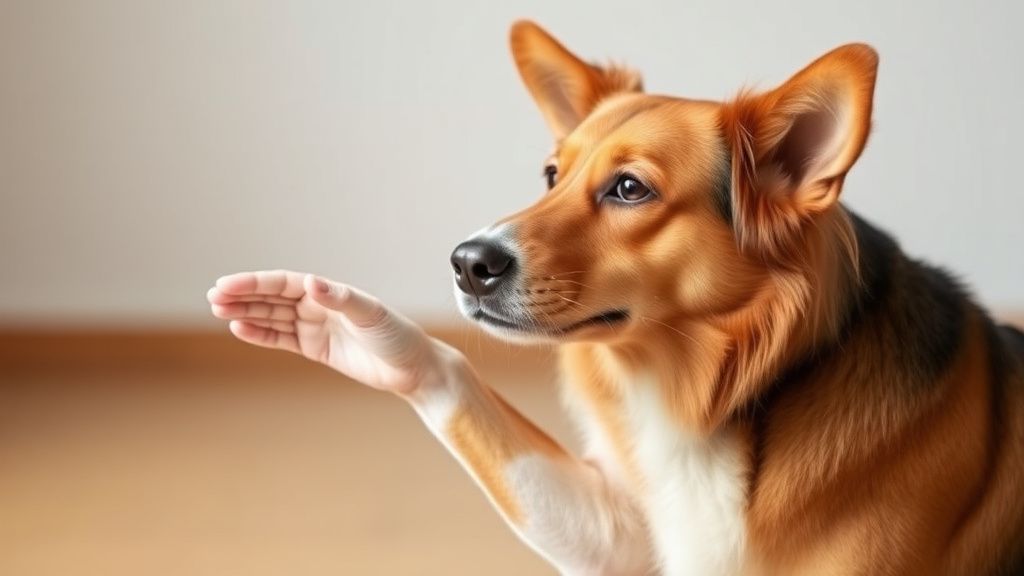
Let's start with the most important point. Hand signals are not a consolation prize for a dog who can't hear. They are a superior, often more reliable, form of communication for *any* dog. Research from organizations like the AKC and VCA Animal Hospitals confirms what many trainers see every day. Dogs with normal hearing often respond more reliably to hand signals than to verbal cues. They are, by nature, astute observers of human body language.
For a dog experiencing hearing loss, whether from age, illness, or congenital deafness, hand signals become an indispensable lifeline. Imagine the frustration and anxiety of a world where familiar sounds are fading or absent. Your voice, once a beacon, grows dim. Now imagine you are given a new, consistent way to understand what your person wants and expects. The relief is tangible. It restores their confidence and their connection to you.
The experts at PetMD and All Stage Canine Development emphasize a critical strategy. If your senior dog is starting to lose hearing but still has some, start *now*. Pair new hand gestures with the verbal cues they already know. Say "sit" while simultaneously giving a clear hand signal. After enough repetitions, your dog will learn to respond to the hand signal alone. This proactive approach smooths the transition immensely, preventing the confusion and behavioral issues that can arise from sudden communication breakdowns.
Getting Started: The Foundation of Silent Communication
Before we teach a single signal, we need to set the stage for success. Training a deaf dog or a senior dog with hearing loss requires some adjustments to your mindset and your environment.
First, always get a veterinary checkup. Hearing loss in seniors can be due to simple aging, but it can also signal other health issues. Rule those out first. Once you have the all clear, you can focus on communication.
Your number one tool is going to be your dog's eyesight. This means you must always be in their line of sight to give a cue. Get their attention with a gentle wave in their peripheral vision, a soft stomp on the floor they can feel, or by flicking a light switch. A small flashlight or a laser pointer (used very carefully and never shone in their eyes) can be a great long-distance "attention getter."
Consistency is your new mantra. Everyone in the household must use the *exact same* hand signal for each command. Confusion is the enemy of learning. I recommend writing down your chosen signals and posting them on the fridge.
Finally, arm yourself with the best motivators. This is where finding the best dog treats becomes mission critical. You need something your dog finds irresistible, as you will be relying entirely on positive reinforcement like treats, toys, and affection. For some dogs, a special treat from a dog food delivery service or a novel snack from their monthly dog best dog subscription boxes can provide that extra level of motivation.
Essential Hand Signals to Teach First
You don't need to learn a whole dictionary of signs on day one. Start with a few practical, everyday signals. The goal is to build success and confidence for both of you. The following signals are commonly recommended by trainers, including those at Dr. Buzby's ToeGrips and Proven K9 Training. Feel free to adapt them to what feels natural for you, but once you pick a gesture, stick with it.
SitThis is often the easiest to start with. Hold a treat in your hand at your dog's nose level. Slowly move your hand up and back over their head. As their nose follows the treat, their bottom will naturally lower. The moment it touches the ground, mark the behavior with a big thumbs up (your visual "yes!") and give the treat. The hand motion becomes the signal.
StayStart with your dog in a sit or down. Hold your palm out flat, facing them like a stop sign. Take one small step back. If they hold position, immediately return, reward, and release with a separate signal like a sweeping "okay" gesture with your hand. Gradually increase the distance and duration.
ComeThis is a vital safety cue. Crouch down, open your arms wide, and enthusiastically pat your chest. Make your body language inviting and happy. When they come to you, shower them with praise and a high value treat.
DownStart with your dog in a sit. Hold a treat in your hand at their nose, then slowly move your hand straight down to the floor between their front paws, then pull it out along the floor away from them. This lures them into a lying position. The downward motion of your hand becomes the signal.
Watch Me / LookThis is arguably the most important signal of all. It means "look at my face for your next instruction." Hold a treat up by your eye. When your dog makes eye contact, mark and reward. This signal is the gateway to all other communication.
Good / Yes (Marker Signal)Since you can't use a clicker or a verbal "yes," you need a clear visual marker to pinpoint the exact moment your dog does the right thing. A big, clear thumbs up, a quick open-and-close of your hand (like a flash), or a specific hand sign like in ASL are all great options. This signal tells your dog, "That! That is what I wanted, and a reward is coming."
Advanced Training and Troubleshooting Common Challenges
Once you and your dog have mastered the basics, you can build on that solid foundation. You can teach signals for everything from "go to your bed" (point to the bed) to "fetch" (point at the toy) to more complex behaviors.
Remember the principle of "shaping." Reward small steps toward the final goal. For "roll over," you might first reward a slight head turn while lying down, then a shoulder roll, and finally the complete roll.
What about challenges? I've seen a few common ones.
If your dog seems frustrated or isn't getting it, break the behavior down into even smaller steps. Make sure your treats are truly motivating. Is the environment too distracting? Go back to a quiet room.
For a dog that is visually impaired as well, use larger, broader gestures closer to your body. You can also incorporate gentle touch cues, like a tap on the shoulder for "sit" or a swipe down the front leg for "down."
The most common issue is the owner forgetting they are not being heard. We naturally call out to our dogs. If you find yourself giving a verbal cue by accident, just follow it immediately with the hand signal. Consistency will win out.
Never, ever punish a dog for not responding to a cue they cannot hear. Frustration is a human problem, not a dog one. If you feel frustrated, end the session on a positive note with an easy trick they know, and try again later.
Enriching Life Beyond Basic Commands
Communication is about more than just obedience. It's about sharing your life. Hand signals can bring joy, play, and deeper bonding into your relationship with your deaf or senior dog.
Teach a signal for "play." It could be a playful bow (mimicking a play bow) or tapping your fists together. Use a specific signal to announce it's time for a walk (hold up the leash) or dinner (tap your empty bowl on the floor).
This is also where tools like a monthly dog subscription box can be a fantastic source of enrichment. The arrival of the box itself can become a cue for a fun, new sensory experience. Use your "watch me" signal, then excitedly open the box to reveal new toys and treats. You can use hand signals to direct them to interact with each new item, turning unboxing into a training and bonding session.
Remember, your dog still wants to work, to play, to be a part of your world. By expanding your visual vocabulary, you give them that gift. I knew a deaf Border [Collie](/breeds/border-collie) who learned over two dozen distinct signals for different toys. His owner would sign "ball," "frisbee," or "rope," and he would joyfully retrieve the correct one. Their connection was a beautiful thing to witness.
Final Thoughts
dog walking calculator this path with a deaf dog or a senior companion losing their hearing asks for patience, but it gives back so much more. It asks you to slow down, to be intentional, to communicate with your whole body. You will become a more observant, more present trainer and friend.The resources we have today, from the expert guides at the AKC to the practical tips from veterinary behaviorists, give us all the tools we need. The hand signals you teach are not just commands. They are words in a silent language of trust. Each thumbs up for "yes," each open-armed "come," each clear "watch me" strengthens the bond that noise never could.
Start today. Pick one signal. Be consistent. Celebrate every small success with a treat from that special stash. You are not losing a way of talking. You are building a new one, and it might just be the most meaningful conversation you and your dog will ever have.
Recommended Products



Find the Perfect Box for Your Dog
Compare top-rated dog subscription boxes and find the best fit for your pup.
Compare Boxes