Essential Hand Signals for Deaf and Senior Dogs
Teach your deaf or senior dog with easy, clear hand signals for better communication and a stronger bond.
Five essential hand signals for deaf or senior dogs are: sit (closed fist rising upward), down (flat palm lowering to ground), stay (open palm facing dog), come (arm sweeping toward your body), and good/yes (thumbs up). Dogs naturally read body language better than verbal cues, so most learn visual signals within 2-3 weeks of consistent practice.
Picture this. You call your dog from across the yard, but he doesn’t even twitch an ear. You raise your voice, a little frustrated, a little worried, and still he gazes past you, oblivious. For many owners of senior dogs or deaf-signals-for-deaf-or-senior-dogs-1772502014784) dogs, this scene is a daily reality. But here’s the beautiful truth: your dog doesn’t need to hear you to understand you. In fact, you might already be communicating in their native language.
Dogs are masters of observation. They read our body language, our posture, and our subtle movements far more intently than we often realize. As the experts at VCA Animal Hospitals point out, many dogs with normal hearing actually respond more reliably to hand signals than to verbal cues. This means you’re not starting from scratch. You’re simply shifting to a channel your dog is already tuned into. Training with hand signals isn't just a workaround for hearing loss, it's a powerful way to engage your dog's mind, strengthen your bond, and provide clear communication through all of life’s stages. Whether your dog is a young pup born deaf or a cherished senior whose world is growing quieter, your hands can become your most eloquent tool.
Why Hand Signals Are a Powerful Tool for All Dogs
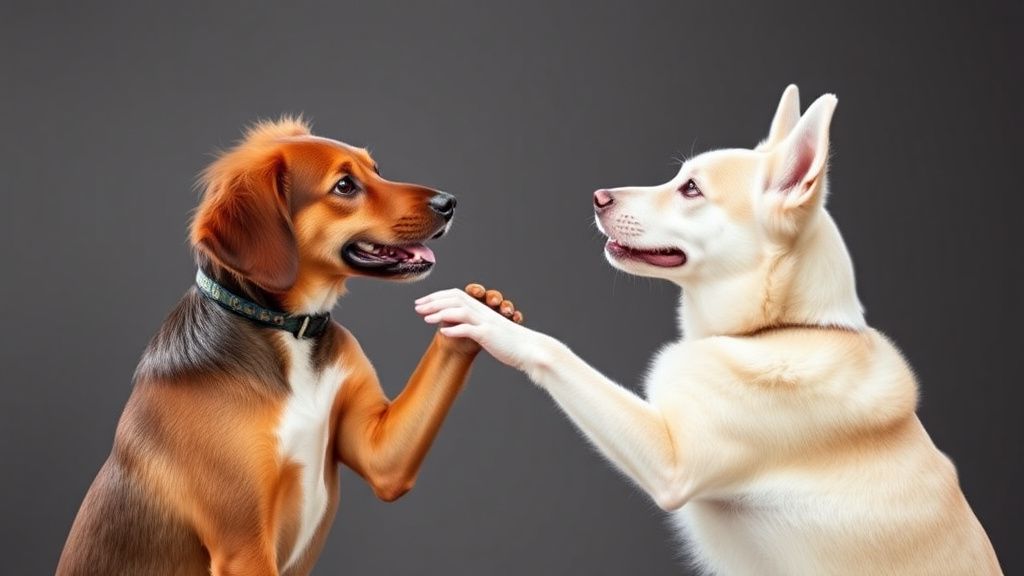
We often think of training as a verbal exercise, but we’re missing a huge piece of the puzzle. Dogs live in a visual world. Think about how your dog knows you’re about to go for a walk just by seeing you pick up the leash, or how they interpret a stranger’s posture as friendly or threatening. This innate skill makes hand signals a profoundly effective method of communication.
For deaf dogs, visual cues are the primary language. Proven K9 Training emphasizes that effective communication for deaf dogs relies entirely on gestures, body language, and visual tools. Hand signals replace the voice, creating a clear and consistent code your dog can understand. But the benefits extend far beyond dogs who are completely deaf.
Senior dogs commonly experience a decline in hearing. That sharp recall they once had may become unreliable as certain pitches fade. Switching to, or incorporating, hand signals gives them a way to understand you that doesn't rely on their aging ears. As BetterPet notes, dog sign language is a great way to communicate with senior pups in their golden years, helping to alleviate the frustration and confusion that can come with hearing loss.
There’s also a fantastic mental benefit. Learning new signals spices up a dog’s routine, gives their brain a workout, and helps combat boredom and anxiety. It’s a form of enrichment as valuable as a new puzzle toy from a dog best dog subscription boxes. I’ve seen older dogs seem to “perk up” and regain a spark of youthful engagement when they successfully learn a new visual cue. It reinforces that you are still connected.
Getting Started: The Foundation of Visual Communication
Before you teach a single command, you need to establish your markers. In verbal training, we use a word like “yes!” or a clicker to precisely mark the moment a dog does something right. For visual training, you need a visual marker.
The American Kennel Club and other experts, like those at Taste of the Wild, recommend a simple, clear gesture: a thumbs up. A closed fist with your thumb pointing upward is distinctive, easy to see, and universally positive. This becomes your “click” or your “yes!” The moment your dog performs the desired action, you flash a clear thumbs up, then immediately follow it with a treat.
The treat delivery is part of the signal, too. Deaf Dogs Rock, a fantastic resource founded by deaf dog owners, advises using a high value treat to lure your dog into position initially. They suggest something special, like light bologna cut into tiny squares. The treat not only rewards but helps guide the dog into the sit, down, or other position. The sequence is key:
1. Show the specific hand signal for the command.
2. Lure the dog into the correct position with a treat.
3. The instant they are in position, flash your marker signal (thumbs up).
4. Immediately give them the treat.
Consistency and patience are everything. Always use the same signal for the same command. Practice in a quiet, low distraction environment first, like your living room. Keep training sessions short, positive, and fun, ending on a success. And remember, you are your dog’s lighthouse. They need to see you. Make sure you have their attention, your gestures are clear and not too fast, and you are positioned where they can easily see your hands.
A Practical Guide to Essential Hand Signals
You don’t need to learn a whole new language overnight. Start with a few foundational commands. The following list draws from common suggestions across our research, including Dr. Buzby’s guide to 13 hand signals and examples from D for Dog. Feel free to adapt these to what feels natural for you and is clear for your dog. The key is that each signal is distinct from the others.
* Sit: This is often the easiest to start with. Hold a treat in your hand at your dog’s nose level, then slowly move your hand up and back over their head. As their nose follows the treat, their bottom will naturally lower. The moment it hits the floor, thumbs up and treat. The formal signal can be an upward motion with your flat hand, palm facing up.
* Down: Start with your dog in a sit. Hold a treat in your closed hand, bring it down to the floor between their front paws, then slowly drag it forward along the ground. This should lure them into a lying down position. Mark and reward. The formal signal can be a clear downward sweep of your hand, palm facing down, from your waist toward the ground.
* Stay: This is about body language as much as a hand signal. With your dog in a sit or down, show them your open palm, like a “stop” sign. Take one small step back. If they hold, immediately step back in, mark with a thumbs up, and reward. Gradually increase the distance and duration. The open palm is your visual cue.
* Come: This is a critical safety command. Make it incredibly positive. Crouch down, open your arms wide in a welcoming gesture, and even pat your legs. You want your body to look exciting and inviting. When they come to you, lavish them with praise (they’ll feel your happy energy) and a top quality treat. Some people use a sweeping wave of the arm toward their body.
* Watch Me / Look: This is arguably the most important command for a deaf or senior dog. You need a way to get their visual attention. Hold a treat up by your eye. The moment they make eye contact, mark and reward. The formal signal can be a pointed finger pointing from your dog to your own eyes.
Don’t try to teach all of these in one week. Master one, then add another. You can even pair a new hand signal with an old verbal cue if your senior dog still has some hearing, creating a strong association that will be useful as their hearing changes.
Advanced Tips and Troubleshooting
Once you and your dog have mastered the basics, you can expand your visual vocabulary. The wikiHow article suggests an interesting approach: using the first letter of a command from American Sign Language (ASL). For example, an “s” handshape for “sit.” This can be a systematic way to build out a full set of cues if you plan to teach many commands.
What about getting your dog’s attention when they aren’t looking at you? This is a common challenge.
* Gentle Vibration: A simple, gentle tap on the shoulder or back can work. You can also use a vibrating collar (not a shock collar). Set on a low vibration, this can be a harmless “tap” to get them to turn and look at you for a signal. Always pair the vibration with something positive, like a treat, the moment they look at you.
* Stomp or Light Flash: Stomping on the floor can create a vibration they may feel. At night, a gentle flashlight beam waved on the floor near them (never in their eyes) can catch their attention. Consistency is key so they learn what this signal means.
If you hit a snag, go back a step. Is the signal clear? Are you marking at the exact right moment? Are the treats valuable enough? Remember, frustration is a communication barrier. Keep sessions short and successful. I always keep a pouch of the best dog treats on hand during training to maintain that high value motivation.
And what about life beyond commands? You can develop “life signals.” A big, exaggerated yawn and stretch can signal “settle down.” A hand gesture toward their bed can mean “go to your place.” Tapping your wrist can mean “dinner time.” Your daily dog food delivery routine becomes a visual event they can read and anticipate.
Enriching Life Beyond Commands
Training with hand signals does more than instill obedience, it builds unshakeable trust. Your dog learns that you are predictable and that they can understand you. This is incredibly reassuring for an animal that may be confused by their silent world. This visual dialogue becomes a cornerstone of your relationship.
Incorporate these signals into your daily routine. Use your “sit” signal before you put down their food bowl. Use “down” and “stay” while you prepare their meal from that fresh dog food delivery. Use “come” for all the good things, like leashing up for a walk or offering a cozy cuddle.
Never underestimate the power of visual praise. While they can’t hear your cheerful “good dog!”, they can see your beaming smile, your relaxed posture, and your happy, open face. Pair that with a hearty thumbs up and a loving pat. Physical affection, when your dog enjoys it, is a universal language of approval.
Final Thoughts
Communicating with a deaf or senior dog isn’t about overcoming a limitation. It’s about discovering a new, and often deeper, dimension of your bond. By choosing to speak their visual language, you are meeting them where they are. You are saying, “I see you, and I will make sure you see me.”
The journey starts with a single, clear gesture and a pocket full of patience. It starts with a thumbs up and a shared moment of understanding. Whether you are adapting to your senior companion’s changing needs or welcoming a deaf dog into your family, your hands are now your voice. Use them to guide, to praise, and to connect in a way that transcends sound. The silence you may have once worried about can become the space where your most meaningful conversations happen.
Recommended Products



Find the Perfect Box for Your Dog
Compare top-rated dog subscription boxes and find the best fit for your pup.
Compare Boxes