Deaf Puppy First Year Hand Signal Training

Train your deaf puppy with clear hand signals. This guide builds a happy, obedient bond in their first year.
Training a deaf puppy in their first year relies on establishing clear, consistent hand signals as your primary language. You will use a visual marker, like a thumbs up or an open flash of your hand, to replace a clicker or verbal "yes," and pair it with high value treats. Focus on foundational cues like "good dog," their name sign, and basic obedience, always using positive reinforcement to build a strong bond and effective communication.
Bringing a deaf puppy home is a unique and rewarding journey. While it may feel different from training a hearing pup, the core principles of patience, consistency, and positive connection remain exactly the same. Your puppy is not disabled; they simply communicate through a different channel. Instead of listening for cues, they will learn by using their vision, their sense of smell, and their sense of touch. This first year is your golden opportunity to build a shared visual language, one hand signal at a time. I've seen the incredible bond that forms when a person and their deaf dog learn to converse in silence, and it all starts with laying a solid foundation of trust and clear gestures. Think of yourself as learning a new language together, where your hands do the talking.
Why Are Hand Signals So Effective for Deaf Dogs?
Dogs are naturally visual communicators. Before we ever teach them a word, they are reading our body language, our posture, and our movements. For a deaf dog, this innate skill becomes their primary window into our intentions. Hand signals tap directly into this strength.
Using established or consistent hand signals benefits your dog beyond just your home. Many veterinarians, groomers, and shelter employees are familiar with common signals, which can help your dog feel more comfortable in those settings. The AKC notes that for obedience behaviors, hand signals are the perfect way to communicate what you want them to do. The key is that the signals are obvious, clear, and consistent from the very beginning. You may need to exaggerate movements initially so your puppy can easily see and understand them, then gradually reduce them to smaller, more subtle signals over time as they learn.
What Are the First Hand Signals to Teach?
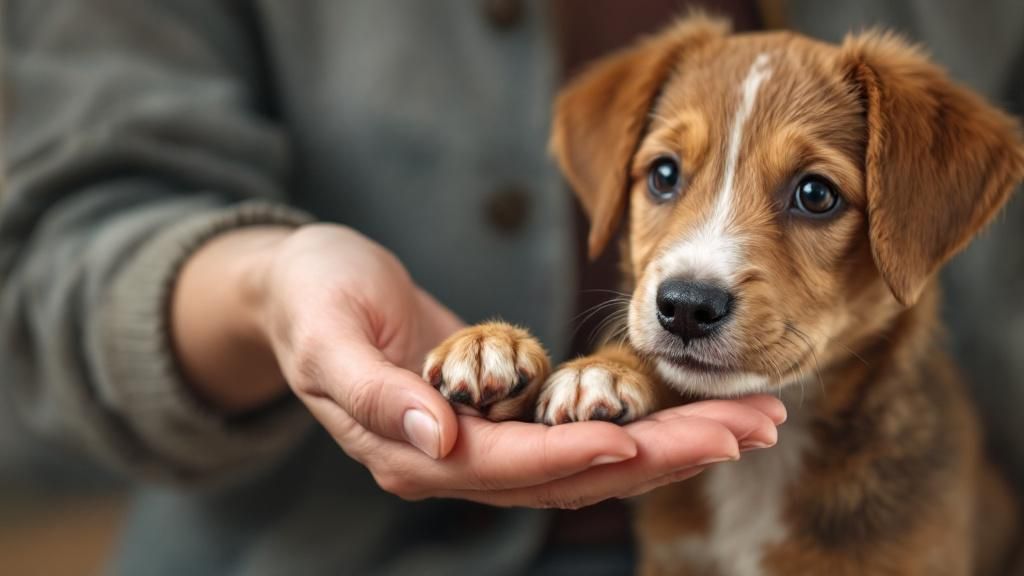
You do not need to learn formal American Sign Language, though you certainly can. Many families create their own "home signs." What matters most is that you pick a few signals to start with and use them consistently every single day. According to experts from Dial a Vet and Deaf Dogs Rock, these are the foundational signals to build upon.
The "Good Dog" Marker Signal
This is the most critical first signal. It replaces the click of a clicker or the word "yes." It tells your puppy the exact moment they did something right. A common and effective marker is a thumbs up gesture or an open, rapid flash of your hand. The instant your puppy performs a desired action, you flash that signal and immediately follow it with a high value treat. This builds a powerful association: "That hand flash means a treat is coming!"
A Name Sign
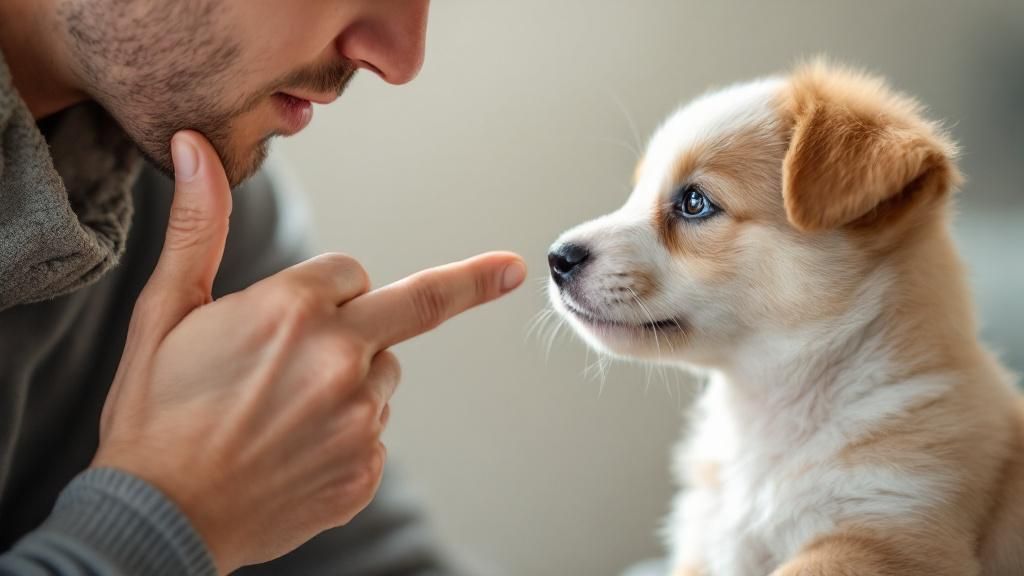
Your puppy needs a way to know you are addressing them. A name sign is a specific gesture you make to get their attention. It could be a wave, a tap on your chest, or a specific hand shape. Use this sign consistently whenever you are about to engage with them, always pairing it with something positive like play, food, or affection.
Core Obedience Signals
Start with these essential cues. You can use common signals or make up your own.
* Sit: Hold a treat at your puppy's nose, then slowly move your hand up and back over their head. As their nose follows the treat, their bottom will naturally lower. The moment it touches the ground, flash your "good dog" marker and give the treat. The hand motion becomes the signal.
* Down: Start with your puppy in a sit. Hold a treat at their nose, then slowly move your hand straight down to the floor between their paws, then out slightly along the ground. Mark and reward as they lie down.
* Come: This is a safety essential. Start indoors in a distraction free space. Crouch down, open your arms wide, and then bring both hands in to tap your chest. When they come to you, mark and reward with an extra special treat, like a piece of light bologna or chicken from your best dog treats stash.
* Stay: With your palm open and facing your puppy, give the signal. Take a single step back. If they hold position, immediately step back in, mark, and reward. Gradually increase distance and duration.
How Do You Train with a Visual Marker?
The process is beautifully straightforward and mirrors clicker training. The team at Sniffspot confirms that for deaf dogs, you need a visual marker where you would ordinarily use a verbal marker.
1. Capture the Behavior: Wait for your puppy to offer a behavior you like, such as a sit or making eye contact. The *instant* it happens, flash your marker signal (thumbs up) and then deliver a treat.
2. Lure and Shape: For more complex behaviors, use a treat in your hand to lure them into position, as described in the sit and down examples above. Mark the exact moment they achieve the position.
3. Add the Cue: Once your puppy is reliably following the lure to perform the behavior, begin to show the hand signal *before* you lure. For example, give the "sit" hand signal, pause for a second, then lure if needed. This teaches them to respond to the signal itself.
4. Practice and Generalize: Practice in short, fun sessions multiple times a day. Gradually practice in different rooms, then in your yard, and eventually in more distracting environments. Consistency is your best tool.
Remember, every interaction is a chance to communicate. Even something like filling their bowl from a dog food delivery can be preceded by their name sign or a "sit" cue.
What Are Common Challenges and How Do You Solve Them?
Training a deaf puppy comes with specific hurdles, but each has a practical solution.
Getting Their Attention: Since you cannot call them, you must be proactive. In the house, you can stamp your foot on the floor to create a vibration they can feel. Always reward them lavishly for checking in with you visually. At a distance or outdoors, a vibrating collar (not a shock collar) can be an invaluable safety tool. Set it to vibrate, pair the vibration with amazing treats, and it becomes a reliable way to get their focus. Preventing Startling: A deaf puppy can be easily startled if approached while asleep or from behind. Always approach from the front where they can see you. Gently wake them by placing your hand in front of their nose so they catch your scent, or by touching them softly on the same spot, like their shoulder, each time. This builds a predictable and safe routine. Managing Frustration: If your puppy is not understanding a signal, the issue is almost always with our communication, not their intelligence. Go back a step. Make the lure more obvious, use a higher value treat, or practice in a quieter environment. Keep sessions to five minutes or less to end on a positive note. A best dog subscription boxes full of novel toys and treats can be great for maintaining their engagement and motivation during training.How Do You Build a Safe and Enriched Life?
Training is just one part of your puppy's first year. Their overall care requires some thoughtful adaptations.
Safety First: Your deaf puppy must always be on a leash or in a securely fenced area. A well fitted harness is ideal. Clearly marked tags that state "DEAF DOG" on their collar and harness are crucial. Consider a bell on their collar so you can hear where they are in the house. Mental and Physical Stimulation: Deaf dogs are often incredibly observant and thrive on activities that engage their other senses. Nose work games, puzzle feeders, and trick training are excellent. Long line walks in safe areas allow for exploration. Tactile games, like hiding treats under cups, are also fantastic. Creating a Confident Dog: Socialization is vital. Expose your puppy gently and positively to various people, places, textures, and other friendly dogs. Use your visual marker and treats to build positive associations. The goal is a dog who is curious and confident, not nervous about the unfamiliar.Final Thoughts
Your deaf puppy's first year is a path of joyful discovery. You are not just training a dog; you are building a profound, silent dialogue built on mutual trust and clear visual cues. Start with your marker signal, build those first few obedience cues, and solve challenges with creativity and patience. The resources from organizations like Deaf Dogs Rock and Battersea Dogs & Cats Home are there to support you. The dog who looks to your hands for guidance will also look to you for love, security, and partnership. The journey may be quiet, but the connection you will forge speaks volumes.
Recommended Products



Find the Perfect Box for Your Dog
Compare top-rated dog subscription boxes and find the best fit for your pup.
Compare Boxes