Best Automatic Feeders for Large Breeds

Choose a durable, high-capacity automatic feeder with large kibble settings and secure programming for your big dog's needs.
Look for an automatic feeder with a large capacity hopper, strong motor for large kibble, durable and secure construction, and flexible programming. Key features include portion control accuracy, easy cleaning, and backup power options to ensure your large breed never misses a meal.
As a devoted owner of a large breed dog, you understand the unique joys and challenges that come with that wagging tail and big appetite. Keeping a giant or large breed dog healthy hinges on consistent, properly portioned meals. Whether you have a long workday, an unpredictable schedule, or simply want to ensure your dog's routine stays rock solid, an automatic feeder can be a lifesaver. But not just any feeder will do. The needs of a Great Dane, Mastiff, or German Shepherd are vastly different from those of a smaller pet. Choosing the wrong one could lead to frustration, mess, or worse, a hungry dog. This guide will walk you through exactly what to look for, using insights from expert reviews and real world testing, so you can find the perfect automated solution for your gentle giant.
Why Portion Control is Non-Negotiable for Large Breeds
Large and giant breed dogs are predisposed to certain health issues, with rapid growth and joint problems being top concerns. Overfeeding, even a little, can accelerate growth and put unnecessary stress on developing bones and joints. Furthermore, maintaining a healthy weight is critical for their long term heart health and mobility. This is where an automatic feeder shines.
A quality automatic feeder delivers an accurate amount of food into a bowl at the exact time you schedule it. This removes the guesswork and emotional pleading from mealtime. It ensures your dog gets the right amount of nutrition, consistently, which is a cornerstone of preventative health care. For households with multiple pets, this control is even more vital. Some advanced feeders use RFID or microchip technology, like those that recognize SureFlap collar tags, to only open for a specific pet. This prevents your fast-eating large breed from stealing food from a smaller, slower housemate, which is a common issue in multi pet homes.
Think of the automatic feeder as a reliable partner in your dog's wellness plan. It complements other health conscious choices you might make, like subscribing to a tailored dog food delivery service that sends pre-portioned, top quality meals right to your door.
Critical Features to Evaluate in a Large Breed Feeder
When shopping, it's easy to get overwhelmed by features. For large dogs, focus on these core aspects that directly impact functionality and safety.
Hopper Capacity and Kibble Size Compatibility
This is the starting point. A feeder designed for cats or small dogs simply won't cut it. You need a unit built to handle the volume and size of food a large breed requires.
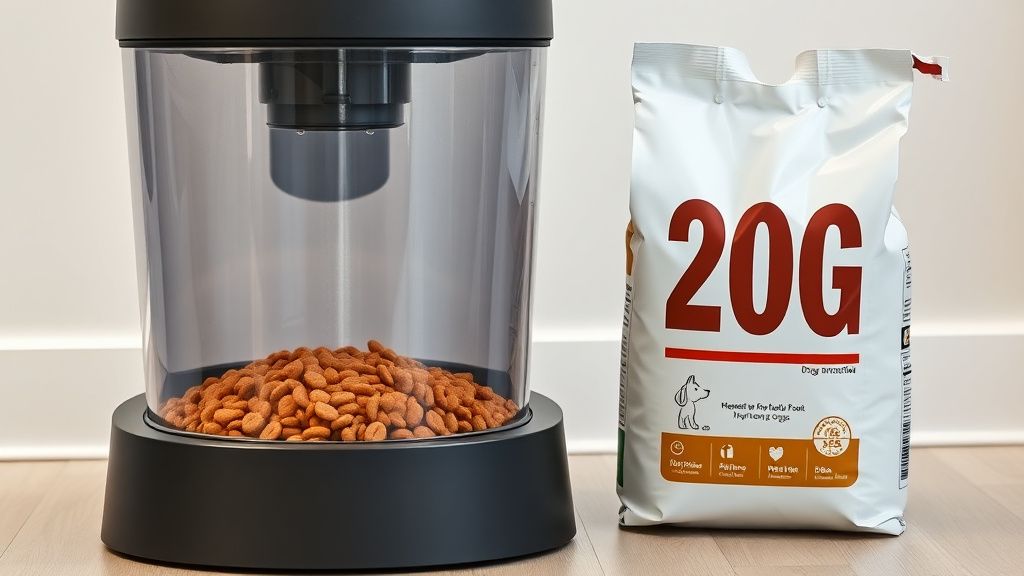
* Capacity: Look for feeders that can hold a substantial amount of food. Research suggests aiming for a model that can hold at least 20 to 30 pounds of dry kibble. Specific models, like the PetLibro Space, advertise a 34 cup food tank that holds up to 7 pounds, while others may offer even more. A larger capacity means fewer refills, which is convenient and helps maintain a consistent feeding schedule.
* Motor Strength and Kibble Size: This is a frequently overlooked but critical detail. Many feeders designed for cats struggle with large kibble. As noted in reviews, you must verify hopper capacity and motor strength. A weak motor might jam or dispense inconsistently when faced with the big pieces found in many large breed formulas. If you use a kibble designed for giant breeds, double-check the feeder's specifications for maximum kibble size.
Construction, Security, and Ease of Cleaning
Your large dog is strong, smart, and possibly very food motivated. The feeder needs to withstand their interest.
* Durability and Security: The feeder should be sturdy and difficult to tip over. More importantly, it must be secure against clever paws and noses. Some feeders with simple push-button lids, while convenient for you, could be "easy for a smart cat or dog to get it open for a face-full of food." Look for models with secure latches or locking mechanisms.
* Cleanability: Hygiene is paramount. Old, stale food residue can harbor bacteria and make your dog sick. Look for a feeder that is easy to disassemble and clean, with dishwasher-safe components if possible. Removable bowls, food hoppers, and internal parts make the weekly clean-up a simple task rather than a dreaded chore.
Programming Flexibility and Power Options
Your dog's schedule and your home's reliability should guide this choice.
* Meal Scheduling: Most feeders allow you to program multiple meals per day. Look for one that lets you customize both the timing and the portion size for each meal. Some offer simple LCD panels for programming, while tech-forward models provide app control for ultimate flexibility from anywhere.
* Power Reliability: A power outage shouldn't mean a missed meal. The most reliable feeders offer a dual power supply, typically AC power with battery backup. One reviewed feeder is noted as having "no stress of power failure as it's only battery-operated," which is another valid approach. A low battery indicator is a helpful feature to ensure you're never caught off guard.
Top Feeder Types for Large Dogs: From Simple to Smart
Automatic feeders come in different styles, each with pros and cons. Your lifestyle and your dog's needs will determine the best fit.
Basic Programmable Feeders: These are the workhorses. They typically feature an LCD screen on the unit itself for setting meal times and portions. The PetSafe Six Meal Feeder is highlighted as a "good compromise" for those who don't want a smartphone app. They are straightforward, often more affordable, and perfect for establishing a consistent routine. Smart WiFi Feeders: For the tech savvy owner, these feeders connect to your home network and a dedicated smartphone app. Models like the Dogness Automatic WiFi Smart Feeder offer app control and real-time notifications. You can adjust schedules on the fly, get alerts when the food is low, and even dispense a meal remotely. This is ideal for owners with irregular schedules or who want to monitor feeding closely while away from home. Specialized Feeders: Some situations call for specific solutions.* Microchip/RFID Feeders: In multi pet homes, these are invaluable. They only open when the authorized pet's microchip or RFID collar tag is detected. This ensures your large breed eats only their designated portion of a special diet or doesn't bully others away from their bowl.
* Outdoor Feeders: If you need to feed a dog in a secure outdoor area, you must select a model built for the elements. For outdoor use, look for weather-resistant materials that can handle rain, wind, and sun. These models prioritize durability and protection of the food supply above all else.
Setting Up Your Feeder for Success
Buying the right feeder is only half the battle. Proper setup and introduction are key to a smooth transition.
First, place the feeder in your dog's usual eating area, on a stable, level surface. Before relying on it for a full meal, do a few test runs while you're home. Let your dog see and hear it dispense a small portion of their favorite kibble or best dog treats. This helps them associate the sound with a positive outcome instead of something scary.
Gradually introduce the automated schedule. Start by having it dispense one scheduled meal a day while you still feed the others manually. This builds trust. Always ensure there is a full, fresh bowl of water available nearby.
Maintenance is simple but non-negotiable. Clean the bowl after every meal, and fully disassemble and clean the hopper and dispensing mechanism at least once a week. This prevents grease buildup and keeps the food fresh. If your feeder uses a desiccant bag to absorb moisture, remember to replace it as recommended.
Potential Drawbacks and How to Mitigate Them
It's fair to acknowledge that automatic feeders have limits. Being aware of them helps you make an informed decision.
One significant point from research is that for very large dogs, no automatic feeder may have a large-enough bowl or hold large-enough kibble. If you have a giant breed like an Irish Wolfhound or a St. Bernard, you must scrutinize product dimensions and weight limits more carefully than anyone else. You might find that the largest feeders on the market still require daily refills, which diminishes some of the convenience.
Mechanical issues, while uncommon, can happen. A jammed motor or a drained battery without backup could lead to a missed meal. This is why the initial training period is so important; your dog should still see you as the primary provider of food. Never let the feeder be the only source of interaction around mealtime. Use it as a tool to maintain routine, but continue to bond with your dog through feeding enrichment toys, hand feeding treats, or simply being present during their automated meal.
For dogs with existing separation anxiety, an automatic feeder can be part of a solution by providing routine, but it is not a cure-all. The underlying anxiety needs to be addressed with proper training and potentially with help from a veterinarian or behaviorist.
Final Thoughts
Choosing an automatic feeder for your large breed dog is an investment in their health and your peace of mind. By prioritizing a large capacity, strong construction, accurate portion control, and reliable power, you can find a model that seamlessly integrates into your life. Remember, the best feeder is the one that fits your specific dog's size, appetite, and personality, while also aligning with your own technological comfort and daily routine.
It is a tool that empowers you to provide consistent care, even when life gets busy. Paired with other modern conveniences like a dog subscription box for toys and chews, it creates a comprehensive care system that ensures your large, loving companion thrives. Take your time, read the reviews, and select a feeder that will stand up to the task, both in size and spirit, for years to come.
Find the Perfect Box for Your Dog
Compare top-rated dog subscription boxes and find the best fit for your pup.
Compare Boxes