Robotic Dog Washers Safe for 2026
Robotic dog washers promise convenience, but are they safe for pets in 2026? We examine the potential risks and innovations.
Robotic dog washing machines, like the WoofWoof Lux, represent a new smart home innovation for 2026 designed to offer automated, stress free cleaning. Their safety depends on proper use, dog temperament, and choosing models with proven safety features like gentle restraints and pet safe detergents. They are not suitable for all dogs, especially those with severe anxiety or specific grooming needs.
The idea of a machine that can wash your dog while you put away groceries or answer emails sounds like something from a futuristic cartoon. For many pet parents, bath time is a chaotic, wet, and often stressful event for both human and hound. In 2026, that reality is being challenged by a new wave of smart home technology specifically adapted for pet care. At the forefront of this trend is the robotic dog washing machine, a concept that has moved from speculative fiction to showroom floors at events like CES 2026. Brands like WoofWoof Lux are promising automated, stress free cleaning. But as we marvel at the engineering, a crucial question bubbles up: is this convenient innovation actually safe for our furry family members? Let's untangle the wires, sensors, and suds to find out.
What Exactly Is a Robotic Dog Washing Machine?
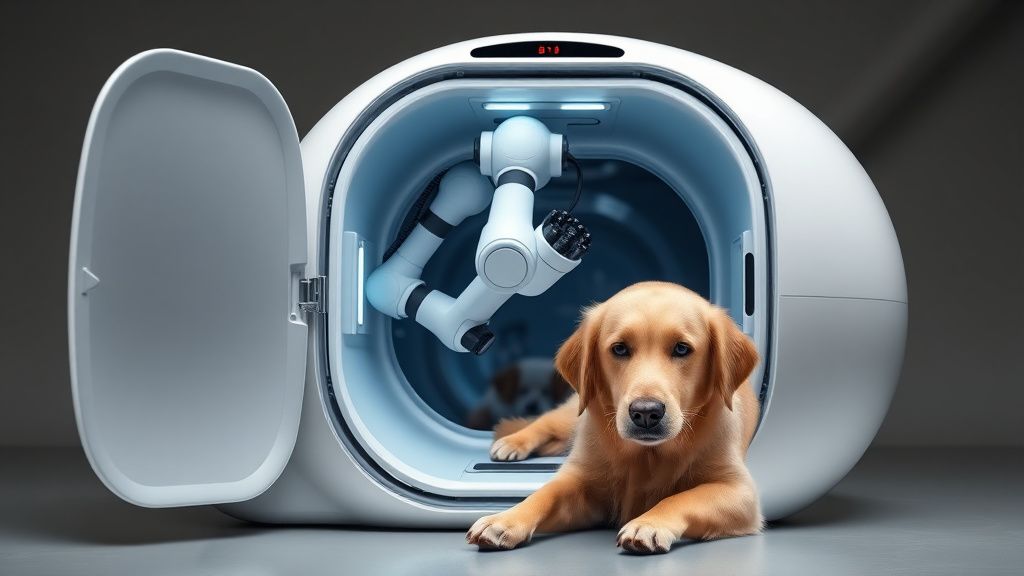
Imagine a combination of a high tech kennel, a car wash, and a smart home appliance. That's the basic premise of a robotic dog washer. While specific models will vary, the general concept involves a enclosed or partially enclosed unit where your dog stands or sits. The machine then takes over, typically following a programmed cycle.
Based on demonstrations and announcements, here’s what the process might look like:
* Gentle Restraint and Calming: The unit likely uses soft, adjustable barriers or harnesses to keep your dog safely in place, not unlike the grooming loops used by professional groomers. Some advanced models may incorporate calming sounds or pheromone diffusion, aligning with the trend of devices that simulate empathy through interactive sounds.
* Automated Washing and Rinsing: Robotic arms or strategically placed nozzles apply a pet safe shampoo and water at controlled temperatures and pressures. This is a far cry from a standard garden hose or showerhead.
* Drying Cycle: Many models include a warm air drying system, similar to a high velocity pet dryer but contained within the unit.
* Smart Home Integration: As a piece of modern smart home tech, it could connect to an app. You might start a cycle remotely, select a wash program for your dog's coat type, or receive notifications when the bath is done.
This innovation fits perfectly into the broader 2026 trend of smart home technology moving from passive assistance to physical action. We're seeing robots that can fold laundry and wash dishes, so a dedicated machine for dog washing is a logical, if ambitious, next step.
The Potential Safety Benefits of Automated Washing
When we think about safety, we often focus on avoiding harm. But safety can also mean creating a predictable, low stress environment. From that perspective, a robotic washer could offer several advantages.

The Serious Safety Concerns and Limitations
For all their potential, robotic washers are not a magic solution. Significant concerns, echoed by skeptics on forums like Quora, must be addressed before considering one for your dog.
The Temperament Trap. This is the most critical limitation. A Quora responder bluntly stated, "Washing needs all differ by breed and temperament and a machine can’t gauge an animals temperament and hold it in a safe manner to wash it." This is a powerful point. A machine using a standard restraint protocol cannot adapt in real time to a dog's panic. A dog that experiences confinement anxiety or is noise sensitive could become terrified, potentially injuring itself by thrashing against the interior. These machines are likely only suitable for dogs who are already calm, confident, and comfortable with handling and novel experiences. Lack of Human Judgment and Touch. A machine cannot look into a dog's eyes and see fear. It cannot feel a subtle tremble or notice a small cut or hot spot that should avoid soap. It cannot offer reassuring praise or pause for a comfort break. The human groomer's ability to read body language and adjust their technique on the fly is an irreplaceable safety feature. Furthermore, grooming isn't just washing; it involves checking ears, eyes, nails, and teeth. A robotic washer does not replace this essential hands on health check. Mechanical and Technical Failures. What happens if the door mechanism jams? If a sensor fails and applies shampoo directly to a dog's eyes? If the drying cycle overheats? While manufacturers will build in safety protocols, the risk of a malfunction causing distress or harm is a real consideration. The reliability of complex consumer robotics is still being proven, as noted in reports from CES 2026 where the capabilities of household robots were put to the test. Coat and Breed Suitability. A one size fits all wash cycle doesn't exist in dog grooming. The needs of a double coated Husky are vastly different from those of a curly coated Poodle or a sensitive skinned Bulldog. A machine might not adequately penetrate a dense undercoat or could over dry a fine coat. Proper grooming often requires specific techniques, brushes, and drying methods that a single purpose robot may not replicate.How to Evaluate if a Robotic Washer is Right for Your Dog
If you're intrigued by this technology, a careful, honest evaluation is necessary. Don't just consider the machine; consider your unique dog.
Conduct a Canine Compatibility Check. Ask yourself these questions:* Is my dog generally calm and adaptable to new experiences?
* How does my dog react to confinement (e.g., crates, cars)?
* Is my dog sensitive to noises like vacuums or hair dryers?
* Does my dog currently stand still for baths, or is it a fight?
If you answered "no" or "poorly" to any of these, a robotic washer is probably a high risk choice. Start by working on positive desensitization to grooming at home.
Research the Specific Model Relentlessly. If you proceed, investigate like you would for a dog food delivery service.* Safety Features: Look for emergency stop buttons, manual override releases, temperature limiters, and non toxic, pet safe materials.
* Size and Restraint System: Ensure it is appropriately sized for your dog's breed and weight. Examine how the restraint works; it should be secure yet comfortable, with ample padding.
* Wash Programs: Does it offer different cycles for different coat types or sensitivity levels?
* Noise Levels: Seek out decibel ratings for the wash and dry cycles.
* Reviews and Demos: Wait for thorough, independent reviews from other pet parents, not just promotional videos. Look for long term reliability reports.
View it as a Tool, Not a Replacement. Even if you use a robotic washer, you must remain actively involved. Always supervise the entire cycle. Perform pre bath checks for sores or irritations. Follow up with thorough brushing, ear cleaning, and nail care. The machine handles one task; you are still the full time caregiver. For everything else your dog needs, from the best dog treats for training to engaging toys, your attentive care is what matters most.The Broader 2026 Pet Tech Landscape: Where Does This Fit?
The robotic dog washer doesn't exist in a vacuum. It's one piece of a fascinating puzzle in pet care innovation for 2026. Understanding this context helps us see its proper place.
We're witnessing a shift toward preventive wellness and continuous monitoring. Devices like health patches and smart collars track vital signs, encouraging early detection of issues. A washing machine that merely cleans is reactive. A future iteration that could analyze shed hair for coat health or scan skin for abnormalities during a wash would be revolutionary, transforming it from a chore appliance to a health tool.
There's also a strong trend toward eco conscious design. Manufacturers are embracing solar charging, recycled materials, and low power components. A responsible pet parent should inquire about a robotic washer's energy and water consumption compared to a traditional bath.
Finally, consider the rise of single purpose vs. multi purpose robots. CES 2026 highlighted a debate: is the future in humanoid robots that attempt many tasks, or in smaller, dedicated machines? The robotic washer is firmly in the latter category. It may be more practical and effective to have a dedicated dog washer, a superb robot vacuum for pet hair, and a separate companion device, rather than one robot that poorly attempts all three. This specialization often leads to better, safer results.
Final Thoughts
The robotic dog washing machine is a compelling and provocative innovation for 2026. It promises a world of easier, cleaner, and potentially less stressful bath times. For a specific subset of dogs, those with unflappable temperaments and owners who do their homework, it may become a safe and useful convenience.
However, it is not a universal solution. The absence of human empathy, judgment, and adaptive touch is a significant safety gap that technology cannot yet bridge. The risks of terrifying a dog with confinement or a mechanical fault are real and serious.
My advice is to approach this technology with cautious curiosity, not immediate adoption. Let the early models be tested and reviewed extensively. In the meantime, focus on making traditional bath time a better experience through positive reinforcement, the right tools, and plenty of patience. The deepest bond with your dog is built through your own hands on care, whether you're giving them a bath, serving their freeze-dried dog food, or simply sharing a quiet moment. No machine, no matter how advanced, can replicate that connection. The future of pet care is smart, but it must always be compassionate first.
Find the Perfect Box for Your Dog
Compare top-rated dog subscription boxes and find the best fit for your pup.
Compare Boxes