Master the Calm Bedtime Crate Routine

Master the bedtime crate routine with a calm "sit and stay" to help your puppy settle in peacefully for the night.
The "Sit and Stay" crate protocol uses basic obedience to build calmness. You teach your puppy to sit and stay outside the crate, then release them inside with a treat, transforming entry into a structured, positive action. This method promotes impulse control and ensures the crate is seen as a safe den, not a punishment.
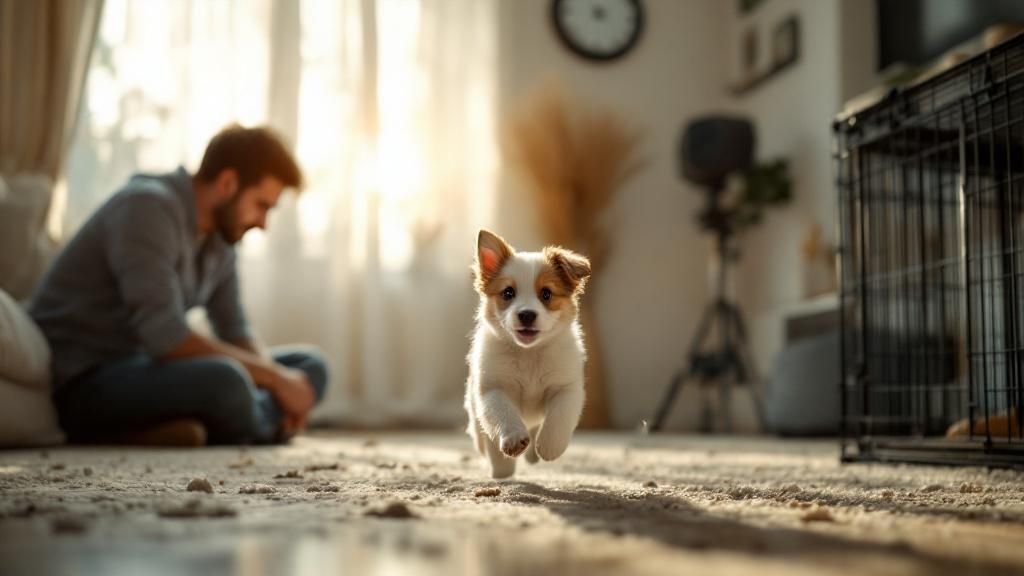
There's a moment every new puppy owner knows well. The clock ticks toward bedtime, and the peaceful evening dissolves into a whirlwind of paws, pleading eyes, and a frantic game of chase as you try to coax your furry bundle of energy into their crate. It ends with you gently pushing a wriggling body through the door, feeling a pang of guilt as you latch it shut. What if bedtime could be different? What if your puppy walked into their crate calmly, even willingly? This isn't a fantasy. By combining the foundational "sit" and "stay" commands with a thoughtful crate introduction, you can create a peaceful nightly ritual. This "Sit and Stay" crate protocol builds good manners from the outside in, teaching impulse control and making the crate a true sanctuary for your pup.
Why the Crate is More Than a Box
Let's reframe the crate. When introduced properly, a crate becomes a place of comfort, not punishment, for your puppy. This is a core principle from the San Francisco SPCA. A crate satisfies a dog's natural den instinct, giving them a private, secure space that's entirely their own. This setup also prepares them for real world situations where confinement is necessary and for their safety, like during travel or veterinary visits. The goal is to have your puppy view the crate as their bedroom, not a timeout corner. Achieving this starts long before you ever give a command. It begins with your first decision, choosing the right crate.
Setting the Stage for Success: Choosing and Introducing the Crate

You wouldn't expect a child to love a bedroom that's the size of a gymnasium or a closet. Size matters just as much for your puppy's crate. Start by choosing a crate that's just large enough for your puppy to stand up, turn around, and lie down comfortably. If the crate is too big, your puppy may be tempted to use one end as a bathroom and the other as a bed, undermining both house training and the cozy den feeling. A properly sized space feels secure and discourages accidents.
Introduction is everything. Carver Street Animal Hospital advises introducing the puppy to the crate as soon as it is brought home and as early in the day as possible. Your first goal is simple, make the crate the most interesting, treat filled place in the house. Forget about closing the door for now.
* The Treat Trail: Place a variety of tasty treats inside the crate throughout the day. Use different ones to keep it exciting, like bits of chicken, cheese, or a special treat from a dog food delivery service you trust. Let your puppy discover them voluntarily.
* Meals in the Den: Feed your puppy their meals inside the crate with the door wide open. This creates a powerful positive association.
* Cozy Comforts: Add a soft blanket and a safe chew toy. You might even tuck a toy from their favorite dog best dog subscription boxes inside to make it extra special.
When your puppy is readily going in and out on their own to nap or enjoy a chew, the foundation is set. Now we can add structure.
Mastering the Building Blocks: Sit and Stay
The "Sit and Stay" crate protocol hinges on your puppy understanding these two basic commands. They are more than just party tricks, they are tools for building calm, reliable behavior. As noted by Pup&Puppy, the "Sit & Stay" command helps in multiple ways. It teaches impulse control, which prevents jumping, running off, or begging. It promotes safety by keeping your dog from running into dangerous situations. It instills good manners, helping your pup stay calm in public spaces, around guests, or while waiting for food.
Teaching "Sit" is often the first command puppies learn. Hold a treat near your puppy's nose, then slowly move your hand up and back over their head. As their nose follows the treat, their bottom will naturally lower to the ground. The moment they sit, say "yes!" and give them the treat. Practice this in short, happy bursts.
"Stay" is an exercise in patience. Start with your puppy in a "sit." Show your open palm to them like a stop sign, say "stay," take one small step back, then immediately step back in to reward them. The key is to reward *before* they break the stay. Gradually increase the distance and duration. If they get up, just calmly reset them and try a shorter, easier version. The guide from Leave It emphasizes building this behavior step by step with real life examples. Don't rush. A solid three second stay with you two feet away is better than a shaky ten second one.
The Protocol: Putting It All Together for Bedtime
Now, let's weave these skills into your bedtime routine. This protocol replaces chaos with calm, predictable steps. Do this when your puppy is naturally a bit settled, not in the middle of a zoomie session.
1. Prepare the Crate: Ensure the crate is inviting with a comfortable bed and perhaps a long lasting chew. Have a handful of top quality treats ready.
2. The Calm Approach: With your puppy on a leash if needed, walk calmly to a spot about three to five feet from the open crate door. Ask for a "sit."
3. Add the Stay: Once sitting, give your "stay" command and hand signal. Hold the stay for just a couple of seconds initially. You are right next to them, so this should be easy.
4. The Release to Crate: This is the crucial part. Use a release word like "okay" or "crate," then gently toss a fantastic treat *into the back of the crate*. The goal is for your puppy to break their stay and move directly into the crate to get the reward.
5. Praise and Peace: As they are inside eating the treat, calmly walk to the crate, say "good settle," and quietly close the door. Do not make a big fuss. The treat and the act of settling is the reward.
What if my puppy breaks the stay early? No problem. Just reset them gently. The lesson is that patience pays off. The treat only appears when they follow the sequence. What if they go in but pop right back out? Use a higher value treat and practice with the door removed first, so the only goal is entering. You can also feed their entire dinner this way, one handful at a time.This method does several brilliant things. It installs a "pause button" on your puppy's excitement. It gives them a job to do (sit, stay, then go in), which is mentally tiring. Most importantly, it makes *them* choose to enter the crate. You are not forcing them, you are guiding them through a pattern that ends with them in their safe space.
Troubleshooting Common Hurdles
Every puppy is an individual. You might hit a snag or two, and that's perfectly normal.
* Whining or Barking in the Crate: If this happens after you've closed the door, ensure all their needs are met, they've been out to potty, and they are tired. Whining for a minute or two as they settle is common. If it persists, they may not be ready for a long stay. Go back to shorter, positive sessions during the day. Never let them out while they are actively whining or barking, as this teaches them that noise opens the door. Wait for a moment of quiet.
* Refusing to Go In: This usually means the foundation needs more work. Return to the treat scattering phase. Make the crate the place where amazing things happen, like a stuffed puzzle toy or a lick mat. Patience is your best tool.
* Too Excited to Sit/Stay: Your puppy might be over tired or over stimulated. Practice the commands at calmer times of day first. A short play session to burn a little energy *before* training can help, but don't do it right before bed or they'll be wired.
Remember, the crate should never be used as punishment. If you need a timeout, use a separate, gated area. We must protect the crate's reputation as the ultimate safe zone.
Final Thoughts
The "Sit and Stay" crate protocol is about more than just getting your puppy behind a door at night. It's about teaching self control, building trust through clear communication, and honoring your dog's need for a secure retreat. This process turns a potential nightly struggle into a connecting ritual. You are not just training a behavior, you are building a language. The calm sit, the patient stay, and the willing entry into the crate become a conversation that says, "I know what's expected, and I feel safe."
I've seen this transform chaotic households. The puppy who once darted under the couch at bedtime becomes the dog who, at the sound of the treat jar, happily trots through their routine and curls up with a sigh. It takes consistency, and it takes using the best dog treats you have to make it worthwhile for them. But the payoff is immense, peaceful evenings and a dog who views their crate as their own personal, perfect den. Give it a try tonight. Start small, be patient, and celebrate the quiet moments of success.
Recommended Products



Find the Perfect Box for Your Dog
Compare top-rated dog subscription boxes and find the best fit for your pup.
Compare Boxes