Emergency Dog Bloat Signs and Prevention Tips
Recognize the deadly signs of dog bloat like a swollen belly and retching. Learn life-saving prevention tips to protect your pet.
Dog bloat, known medically as gastric dilatation-volvulus (GDV), is a life threatening emergency where a dog's stomach fills with gas and twists on itself, cutting off blood flow. Immediate veterinary care is critical, as shock and organ damage can be fatal within hours. Prevention focuses on managing risk factors like breed, feeding practices, and stress.

Imagine your dog, happy and energetic after dinner, suddenly becomes restless. Their abdomen starts to swell, visibly distending before your eyes. They try to vomit but nothing comes up, and their breathing becomes rapid and shallow. This isn't a simple upset stomach; it's the terrifying onset of gastric dilatation-volvulus (GDV), commonly called bloat. As a dog care writer, I've spoken with countless owners and veterinarians, and the stories are chillingly similar. GDV is one of the most dire emergencies a dog can face, striking rapidly and without mercy. But knowledge is your most powerful tool. Understanding what bloat is, recognizing its signs instantly, and knowing how to reduce your dog's risk can make the difference between life and death. This guide pulls together expert information from leading veterinary institutions to give you a clear, actionable plan.
What Exactly is GDV (Dog Bloat)?
To understand the emergency, you need to understand the mechanics. GDV is a two part process, as outlined by the Cornell University College of Veterinary Medicine. First, gastric dilatation occurs. This is when the stomach fills with air, fluid, or food, causing it to expand dramatically. Think of a balloon being inflated inside your dog's abdomen. This immense pressure alone is dangerous.
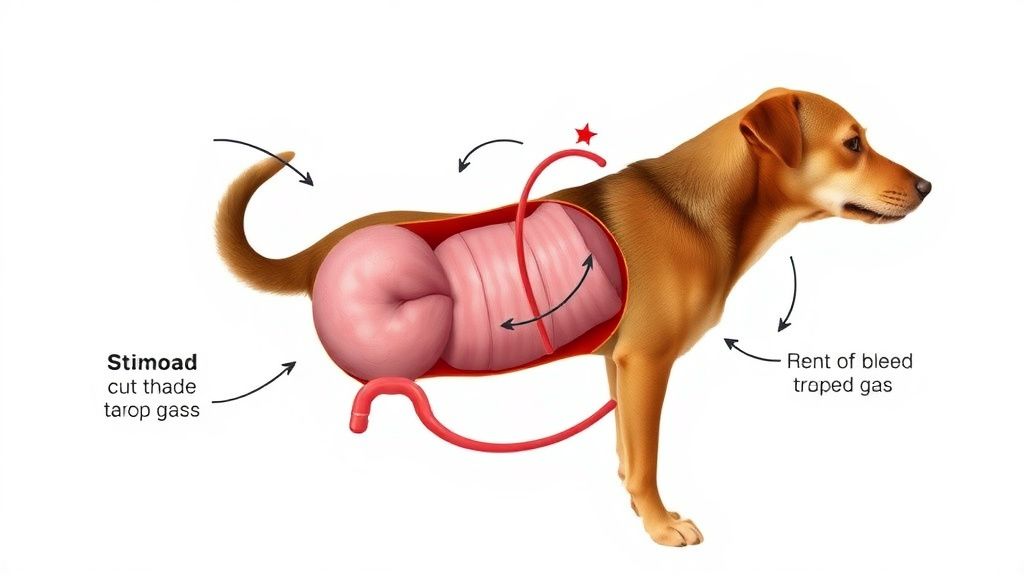
The second, more deadly phase is volvulus. This is when the massively distended stomach twists on itself, often a full 180 to 360 degree rotation. This twist traps the gas and contents inside, creating a sealed, expanding chamber. It pinches off the blood supply to the stomach and, critically, to the spleen and other major vessels. Blood cannot return to the heart properly, leading to shock. The twisted stomach also puts pressure on the diaphragm, making it hard for the dog to breathe. As VCA Animal Hospitals explains, tissue begins to die rapidly due to lack of blood flow, and toxins are released into the bloodstream. Without immediate surgical intervention, the condition is almost always fatal. It's a race against the clock from the very first symptom.
Which Dogs Are Most at Risk?
While any dog can theoretically bloat, certain factors significantly increase the odds. Knowing if your dog is in a high risk category is the first step in proactive prevention.
Breed and Build are Primary Factors. Large and giant breeds with deep, narrow chests are overwhelmingly overrepresented. The Animal Emergency & Specialty Center notes that "deep chested dogs – where the chest length from sternum to backbone is markedly longer than chest width – are particularly at risk." This anatomical shape gives the stomach more room to move and potentially twist.Common high risk breeds include:
* Standard Poodles
Age and Genetics Matter. Older dogs are more susceptible than young puppies. There also appears to be a genetic component; if a dog's close relative (parent or sibling) has suffered from GDV, their risk is higher. Feeding and Behavior Patterns. How and when your dog eats plays a role. Dogs that eat one large meal a day, eat rapidly, or gulp air (a behavior called aerophagia) are at greater risk. Using a raised food bowl, once thought to help, is now considered a potential risk factor by many veterinarians. Stressful environments or anxious temperaments may also contribute. You can learn more about managing canine stress in our dog anxiety guide.What Are the Emergency Signs of Bloat?
Time is the enemy with GDV. Symptoms can progress from mild discomfort to critical shock in a matter of hours, sometimes even minutes. You must act on the *first* signs, not wait for all of them to appear. The American Kennel Club emphasizes that bloat is a "medical and surgical emergency." Here is what to watch for:
* Unproductive Retching: This is one of the most classic signs. Your dog will try to vomit repeatedly but may only produce small amounts of frothy saliva or nothing at all. Do not mistake this for typical vomiting.
* A Distended, Hard Abdomen: The belly may visibly swell, often behind the ribs, and will feel taut like a drum if gently tapped. However, in some dogs with deep chests, the swelling may be harder to see.
* Restlessness and Pacing: The dog cannot get comfortable. They may pace, whine, or repeatedly look at their abdomen.
* Excessive Drooling: This is often due to nausea and the physical blockage.
* Rapid, Shallow Breathing: The enlarged stomach presses against the diaphragm, making it difficult to take deep breaths.
* Pale Gums: Gums may appear white, blue, or bright red instead of a healthy pink, indicating poor circulation or shock.
* Collapse and Inability to Stand: This is a late stage sign indicating severe shock and requires *immediate* transport.
If you observe even one or two of these signs, especially unproductive retching combined with a swollen belly or restlessness, consider it a RED ALERT. Do not wait. Do not try home remedies. Call your nearest emergency veterinary clinic and tell them you suspect GDV, then get in the car.
How is GDV Treated by Veterinarians?
GDV treatment is a multi stage, intensive process. As BluePearl Pet Hospital states, emergencies like bloat "demand swift surgical intervention." Survival depends entirely on the speed and quality of this emergency care.
Step 1: Stabilization. The dog is in shock, so surgery cannot be performed immediately. VCA Animal Hospitals details that "shock must be treated immediately, using intravenous fluids and emergency medications." The veterinary team will place IV catheters to deliver life saving fluids and drugs to support blood pressure and heart function. They will often pass a tube through the mouth into the stomach to try and decompress it, relieving some pressure. Oxygen therapy is also started. Step 2: Diagnostic Tests. Blood work is done to assess organ function and the extent of metabolic crisis. X-rays are crucial to confirm the stomach is twisted (volvulus) and not just dilated. Step 3: Emergency Surgery. Once the patient is as stable as possible, they go straight to surgery. The surgeon will untwist the stomach and return it to its normal position. They then thoroughly examine the stomach and spleen for damaged, dead tissue that must be removed. The most critical part of the surgery is performing a gastropexy. This procedure permanently attaches the stomach to the abdominal wall, preventing it from twisting again in the future. It is the standard of care. Step 4: Post Operative Care. Recovery is intensive, involving continued IV fluids, pain management, antibiotics, and monitoring for complications like heart arrhythmias or infection. Hospitalization typically lasts several days.Can You Prevent Dog Bloat?
While there is no guaranteed way to prevent GDV, you can significantly reduce your dog's risk through management strategies. The AAHA stresses that "being prepared can save your dog’s life."
Manage Feeding Habits:* Feed Multiple Small Meals: Instead of one large daily meal, split your dog's food into two or three smaller portions.
* Slow Down Fast Eaters: Use a slow feed bowl, a puzzle feeder, or place a large, clean rock in the bowl to force your dog to eat around it.
* Avoid Vigorous Activity Around Meals: Restrict intense play, running, and excitement for at least one hour before and two hours after eating. Encourage calm, relaxed digestion.
* Ensure Constant Access to Water: But consider limiting huge gulps immediately after eating.
* Choose Appropriate Food: Discuss your dog's diet with your vet. For some dogs, a balanced and complete diet from a reputable fresh dog food or freeze-dried dog food delivery service can help regulate digestion, but always transition foods slowly to avoid gas.
Consider Proactive Gastropexy. For high risk breeds, many veterinarians recommend a prophylactic gastropexy. This is the same stomach tacking procedure done during emergency GDV surgery, but it's performed electively, often when a dog is spayed or neutered. Cornell University states that this preventive measure "greatly reduces the risk of this condition." It doesn't prevent the stomach from dilating with gas, but it almost entirely eliminates the risk of the fatal twist (volvulus). It's a conversation every owner of a high risk breed should have with their vet. Minimize Stress. Anecdotal evidence links stressful events to bloat episodes. Maintain a calm environment, especially during mealtimes. Using calming aids or techniques can be helpful for naturally anxious dogs. Know Your Dog and Your Vet. Be intimately familiar with your dog's normal behavior and belly contour. Also, know the location and phone number of your nearest 24 hour emergency veterinary hospital *before* you need it. Programming it into your phone is a simple, potentially life saving step.Final Thoughts
Living with the fear of GDV, especially if you have a high risk breed, can be a quiet anxiety in the back of every owner's mind. But we can't live in fear; we must live in preparedness. The goal isn't to panic, but to empower yourself with knowledge. Memorize the signs of bloat. Implement sensible feeding practices. Have the important conversation with your veterinarian about your individual dog's risks and whether a preventive gastropexy is right for them. Consider tools that promote slower eating and mental stimulation, which you can often find curated in a monthly best dog subscription boxes tailored to your dog's needs.
Remember, if you ever see those signs – the unproductive retching, the restlessness, the swollen belly – your only job is to get to the emergency vet. Do not hesitate. Your swift action, guided by the information you've learned today, is what gives your dog the best possible chance at survival. Keep this guide bookmarked, share it with fellow dog owners, and let's work together to protect our beloved companions from this swift and silent threat.
Recommended Products



Find the Perfect Box for Your Dog
Compare top-rated dog subscription boxes and find the best fit for your pup.
Compare Boxes