2026 Smart Vs Standard Feeder Guide

Discover the key differences between smart and standard feeders to choose the best one for your pet in 2026.
A standard automatic feeder uses simple timers and dials to dispense meals on a fixed schedule, perfect for routine and budget conscious pet parents. A smart automatic feeder connects to Wi-Fi and an app, allowing remote scheduling, portion control, and monitoring, ideal for variable schedules and tech savvy owners seeking greater oversight and flexibility.
Choosing the right automatic feeder for your dog can feel overwhelming. The market in 2026 is flooded with options, from basic timer based models to advanced devices that connect to your phone. Is the convenience of a smart feeder worth the investment, or will a simpler model do the job just as well? As someone who has tested many of these devices and talked with countless pet parents, I can tell you the best choice depends entirely on your lifestyle and your dog's specific needs. This guide will break down the real differences, using the latest expert reviews and data, to help you make a confident decision.
What Exactly Is a Standard Automatic Feeder?
Let's start with the basics. A standard automatic feeder, often called a "dumb" feeder, operates without any internet connectivity or complex programming. It's a mechanical solution to a simple problem: getting food to your dog at set times.
These feeders typically use a dial timer you physically set on the device itself. You program the clock and the times you want the feeding compartment to open, often for one or two meals per day. The PetSafe Healthy Pet Simply Feed Automatic Feeder is a classic example of this category, though experts note it's quite large, holding up to 24 cups of food. A crucial safety tip from Wirecutter applies here: regardless of hopper size, you should never store more than a week's worth of kibble to prevent it from possibly going rancid.
The primary appeal is simplicity and reliability. As noted by Philly Daily, "It's actually simpler than you might think. There is no complicated AI or smartphone connectivity required to activate this feeder." You set it, forget it, and it runs on AC power or batteries. For dogs with rock solid routines and owners who want a straightforward, often more affordable, tool to ensure breakfast happens on time even if they're running late, a standard feeder is a fantastic option.
What Makes a Smart Feeder "Smart"?
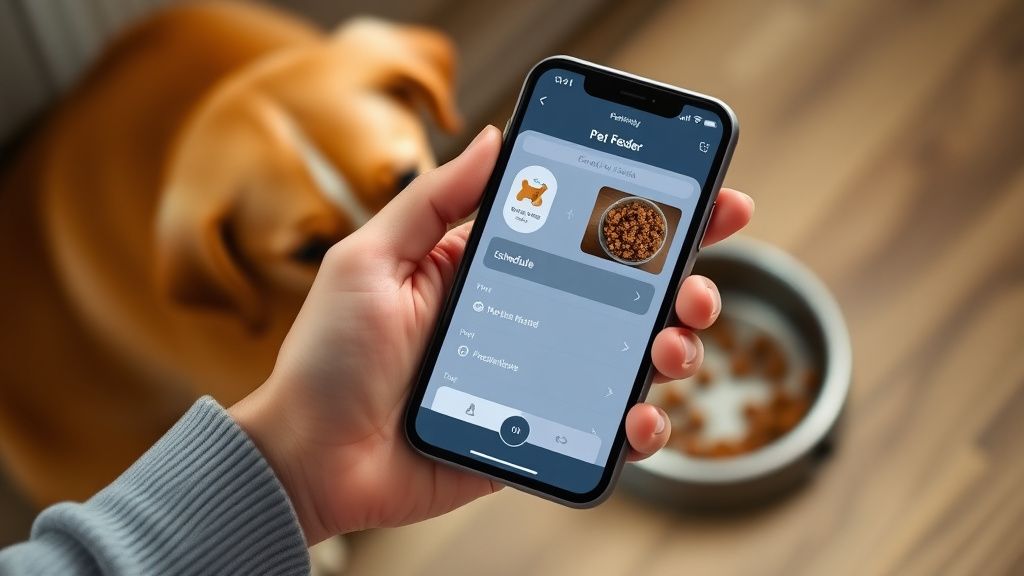
Smart feeders take the basic concept and connect it to your digital life. The core difference is Wi-Fi (or Bluetooth) connectivity paired with a mobile app. This app becomes your control center.
Instead of fiddling with dials on the machine, you use your phone to set feeding schedules, adjust portion sizes on the fly, and even trigger an immediate "Feed Now" meal from anywhere. This remote access is, according to industry insights from SZPetrust, "not just a luxury anymore; it’s a daily convenience, particularly for professionals and frequent travelers." Imagine being stuck at work and realizing you forgot to adjust your dog's dinner time. With a smart feeder, you can fix that in seconds.
These feeders often come with additional features:
* Remote Monitoring: Many have built in cameras or audio so you can see and talk to your pet during meal times.
* Detailed History: The app logs every meal dispensed, which is great for tracking your dog's eating habits.
* Multi User Access: Family members or your dog walker can have their own app access.
* Integration: Some models can work with other smart home devices.
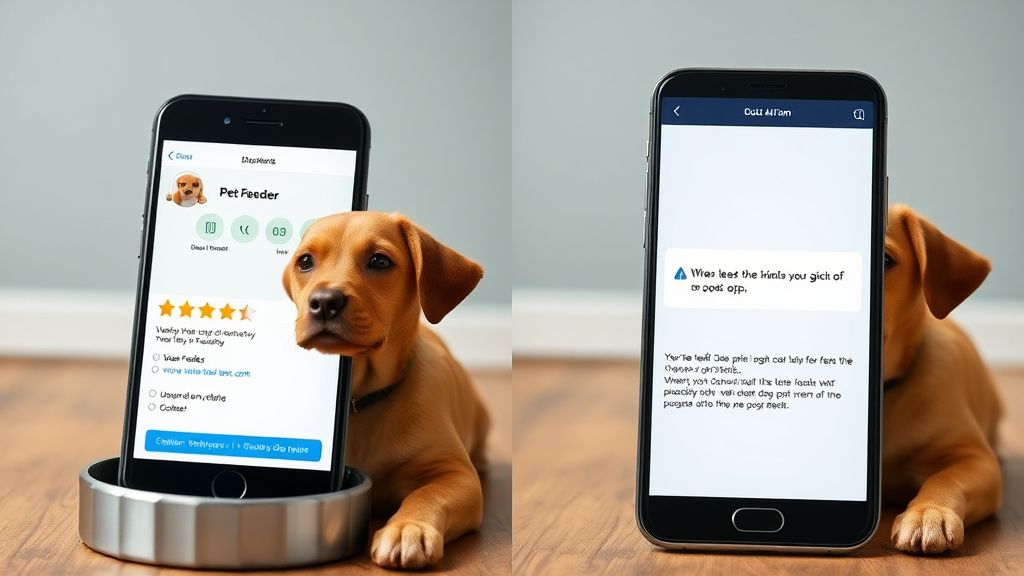
However, the smart experience lives and dies by the app's quality. Wirecutter's review of the PetSafe Smart Feed 2.0 highlights a critical pitfall: a glitchy, "practically unusable" app that messed up scheduling. This underscores a key point: when buying a smart feeder, the hardware is only half the product. You must research the app's reliability and user reviews.
Key Factors to Compare: Smart vs. Standard
Now that we understand the types, let's put them side by side on the factors that matter most.
Programmability and Control
* Standard: Limited to the physical controls on the device. Most offer 1-2 meals per day, like the model K9 Magazine mentions with "a dial timer with up to a 48-hour delay." Making changes requires you to be physically present.
* Smart: Offers granular control via an app. You can typically schedule multiple meals per day with precise portion sizes. You can also pause schedules, add extra meals, or change plans remotely, offering immense flexibility for unpredictable days.
Portion Management and Food Type
Both types can handle dry kibble well. The capacity varies, with some like the PetSafe Simply Feed holding up to 24 cups. If you use freeze-dried dog food or semi moist food, check the manufacturer's specifications, as some models, like one noted by Dogster, can accommodate them.
Where smart feeders can excel is in micro managing portions for health or weight control. This scheduled, controlled portioning can be beneficial for dogs who eat too fast, a point made by Conbun regarding cats that "scarf-and-barf." The same logic applies to dogs prone to bloat or weight gain.
Reliability and Power
* Standard: Often runs on batteries or has a battery backup. Their simplicity means fewer points of failure. If the timer breaks, the feeder is useless, but there's no app to crash.
* Smart: Dependent on both power and a stable Wi-Fi connection. A power outage or internet drop can disrupt feeding unless the unit has a strong battery backup and offline memory. The complexity introduces more potential failure points.
Ease of Use and Setup
* Standard: Usually very easy to set up. You insert batteries or plug it in, set the clock, and choose your meal times. There's no software to download or accounts to create.
* Smart: Setup involves connecting the device to your Wi-Fi network and installing/configuring an app. This can be a hurdle for the less tech inclined. As the smart bird feeder guide from WIRED implies, a good app should feel intuitive, not like a chore.
Cost and Value
Standard feeders are almost always less expensive upfront. Smart feeders command a higher price for their connectivity and features. You need to ask yourself if the value of remote access, monitoring, and fine tuned control is worth that premium for your specific situation. For a single dog with a fixed schedule, it might not be. For multi pet households, busy professionals, or dogs with medical needs, it very well could be.
Who Should Buy a Standard Feeder?
A standard automatic feeder is the perfect choice for:
* Owners with Consistent Schedules: If you and your dog live by a predictable routine, the basic timer function is all you need.
* Budget Minded Pet Parents: You get the core benefit of automated feeding without the tech markup.
* Those Wary of Tech Glitches: If the idea of a finicky app causing a missed meal stresses you out, a mechanical timer offers peace of mind through simplicity.
* Dogs Who Are Not "Tech-Testers": Some dogs are clever and will try to hack a feeder. The physical "Feed Now" button on some standard models can be a vulnerability, as TechnoMEOW warns that a "curious paw" might trigger it. However, many smart feeders have the same physical button risk.
Who Is a Smart Feeder Best For?
Investing in a smart feeder makes the most sense for:
* Frequent Travelers or Busy Professionals: The ability to monitor and adjust feeding from anywhere is a true lifesaver. It provides reassurance when you're not home.
* Multi Pet Households: Some advanced models can recognize specific pets via microchip or RFID collar tags (like the feature mentioned by Penthouse Paws), though these are more common for cats. For dogs, remote portion control helps manage different dietary needs.
* Dogs with Special Dietary Needs: Precise, app controlled portions are ideal for weight management programs or medication schedules mixed with food.
* Data Loving Owners: If you want to track exactly how much and when your dog eats over time, the app logs are invaluable.
* Pet Parents Who Worry: The combination of a camera, meal alerts, and remote interaction can significantly reduce anxiety about your dog's well being while you're out.
Top Features to Look for in 2026
Regardless of which path you choose, here are the critical features to evaluate based on 2026 market research:
1. Hopper Size and Food Freshness: Match the hopper to your dog's weekly consumption, not maximum capacity. Remember the expert warning: don't store more than a week's worth of food to maintain freshness. Consider a feeder with an airtight seal.
2. Power Source: Look for models with both AC adapters and battery backup. This ensures meals are dispensed even during a power failure.
3. Dish Design: Is the bowl removable and dishwasher safe? This is crucial for hygiene.
4. App Reliability: If choosing smart, this is paramount. Read recent user reviews specifically about the app's stability and interface. Clunky software ruins the experience.
5. Portion Customization: Can you adjust meal size in small increments? This is key for small dogs or precise diet control.
6. Safety: The feeder should be sturdy enough not to be tipped over or chewed by a determined dog. Also, look for models from reputable manufacturers ranked for reliability, as highlighted in industry reports.
Integrating Your Feeder into a Holistic Care Routine
An automatic feeder is one tool in your dog care toolkit. It works beautifully alongside other modern conveniences that prioritize your dog's health and happiness.
For instance, while your feeder manages the timing, you can ensure the food it dispenses is of the highest quality. Pair it with a fresh dog food delivery service for optimal nutrition. You can also use the consistency provided by the feeder to manage treat dispensing more effectively. Instead of random handouts, schedule treats as part of their daily calorie intake, perhaps using puzzles or toys. For a monthly surprise that complements their meals, consider one of the best dog subscription boxes for toys and chews.
The goal is to use technology not to replace your interaction, but to enhance the quality of your care. The feeder handles the routine, freeing you up for more meaningful moments like walks, training, and cuddles.
Final Thoughts
Choosing between a smart and standard automatic feeder in 2026 isn't about picking the "best" one overall, but the best one for your life and your dog. If your days are variable and you crave control and insight from anywhere, the investment in a well reviewed smart feeder will likely feel worth it. Just do your homework on that app.
If your routine is stable and you simply need a reliable, mechanical assistant to keep things on track, a high quality standard feeder will serve you faithfully for years. Whichever you choose, you're taking a positive step toward consistent care for your dog. That consistency, as experts from CNN Underscored point out, is great for ensuring your pet gets proper nutrition and takes some responsibility off your hands. In my experience, that little bit of help can make a big difference in the daily life of a busy pet parent.
Recommended Products



Find the Perfect Box for Your Dog
Compare top-rated dog subscription boxes and find the best fit for your pup.
Compare Boxes