Choose Your Dog's Digestive Support

Unlock your dog's gut health: digestive enzymes break down food while probiotics balance their microbiome.
Digestive enzymes and probiotics serve different but complementary roles in your dog's gut health. Digestive enzymes are proteins that break down food to aid digestion and are most beneficial for dogs with specific issues like Exocrine Pancreatic Insufficiency. Probiotics are beneficial bacteria that support the gut microbiome, helping with issues like diarrhea and allergies. Many dogs can benefit from both, but your choice should be based on your pet's specific symptoms and needs.

If your dog has been experiencing tummy troubles, you're likely searching for a solution. Gas, loose stools, or a lack of energy can be frustrating for both you and your furry friend. In the world of canine nutrition, two supplements often come up as potential heroes: digestive enzymes and probiotics. While their names sound similar and both support digestion, they work in fundamentally different ways. Understanding this difference is key to choosing the right support for your dog's unique situation. Let's clear up the confusion so you can make an informed decision for your pet's well being.
What Are Digestive Enzymes for Dogs?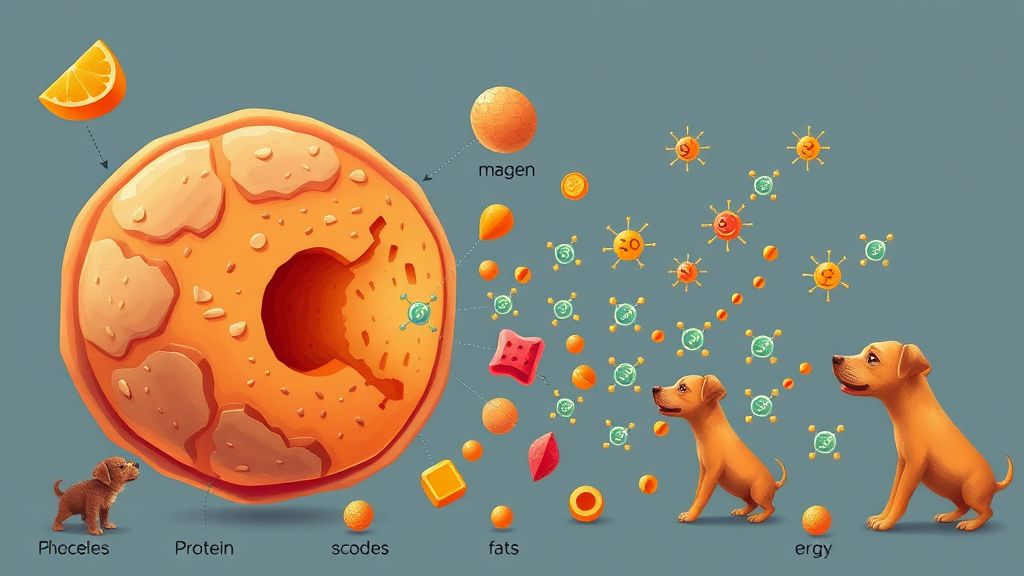
Think of digestive enzymes as your dog's internal kitchen staff. Their sole job is to take the large, complex molecules in food, proteins, fats, and carbohydrates, and chop them into tiny, absorbable pieces. As defined by Pet Honesty, a digestive enzyme is any protein that helps to break down food to aid digestion. Dogs naturally produce these enzymes in their pancreas and other organs.
However, sometimes this production line falters. Age, illness, or certain conditions can lead to a shortage. When food isn't broken down properly, it passes through the gut largely intact, which means your dog misses out on vital nutrients. This can lead to weight loss, dull coat, and yes, those unpleasant digestive upsets. According to TotalVet, digestive enzymes are most beneficial to dogs struggling with Exocrine Pancreatic Insufficiency (EPI) or other health issues that affect correct digestion and nutrient absorption. For these dogs, enzyme supplements are not just helpful; they are often essential medical therapy.
What Are Probiotics for Dogs?If enzymes are the kitchen staff, probiotics are the friendly security and maintenance team for your dog's intestinal neighborhood, the gut microbiome. This neighborhood is home to trillions of bacteria, both good and bad. Probiotics are live, beneficial bacteria that you add to support the good guys.
Their role is less about breaking down food and more about managing the environment. Probiotics help crowd out harmful bacteria, strengthen the gut lining, and support the immune system. As noted by Canidae, probiotics can be very beneficial for supporting immune function and fighting infections of the digestive tract. They are particularly useful when the balance of gut bacteria is disrupted, which can happen after a course of antibiotics, during periods of stress, or after a dietary indiscretion (like getting into the trash).
Key Differences: Enzymes vs. ProbioticsIt's easy to mix them up because the end goal, better digestion, is the same. But their functions are distinct.
* Primary Function: Enzymes *digest* food. Probiotics *populate* the gut.
* What They Are: Enzymes are proteins. Probiotics are live microorganisms (bacteria or yeast).
* Main Benefit: Enzymes improve nutrient absorption from food. Probiotics improve the health of the gut environment and immune response.
* Best For: Enzymes are best for dogs who cannot properly break down their food, leading to nutrient deficiency. Probiotics are best for dogs with an imbalance of gut bacteria, leading to issues like diarrhea, gas, or yeast overgrowth.
The team at Moonlight Pet Store sums it up well: "For overall gut health, probiotics play a uniquely protective and restorative role. Probiotics add good bacteria... Digestive enzymes help the dog use the food properly."
When Does Your Dog Need Digestive Enzymes?Supplementing with digestive enzymes is typically targeted rather than general. Look for these signs that your dog might not be producing enough enzymes on their own:
* Consistently foul smelling gas and stools
* Greasy, pale, or voluminous diarrhea
* Weight loss despite a good appetite
* Eating non food items (pica), which can indicate a nutrient deficiency
* A diagnosis of EPI, pancreatitis, or chronic inflammatory bowel disease (IBD)
If your dog is on a heavily processed kibble diet, some experts argue that adding enzymes can be helpful. As one opinion from Hungry Hound states, "In my opinion every dog should have digestive enzymes added to their diet, no matter what they are eating." The reasoning is that cooking and processing can destroy natural enzymes found in food, placing more burden on your dog's pancreas. This is a consideration for pet parents using traditional dog food delivery services.
When Does Your Dog Need Probiotics?Probiotics have a broader application for maintaining daily gut resilience and addressing specific upsets. Consider a probiotic if your dog shows:
* Occasional diarrhea or loose stools (from stress, diet change, or minor illness)
* Chronic flatulence
* Signs of allergies, including itchy skin and ears (much of the immune system resides in the gut)
* Recurrent yeast infections
* During and after a course of antibiotics
* During periods of high stress (like moving or boarding, which can be eased with resources from our dog anxiety guide)
They are a great tool for promoting overall gut balance, especially for dogs on any diet, including fresh dog food or raw dog food, where maintaining a healthy microbial balance is key.
Can You Use Them Together?Absolutely. In fact, they often work better as a team. Think of it this way: enzymes ensure the food is broken down efficiently, while probiotics ensure the resulting environment in the intestines is healthy and the nutrients are utilized well. A dog with EPI, for example, will absolutely need enzymes but may also benefit from probiotics to soothe an intestine that has been irritated by poorly digested food.
When selecting supplements, always choose products formulated specifically for dogs. PetMD advises, "It’s best to choose a probiotic that’s formulated for your dog’s needs. Using a human probiotic for dogs may worsen their digestive upset." This rule applies equally to enzymes. Dr. Axe explicitly warns, "It is not recommended to give your dog digestive enzymes meant for humans."
How to Choose and Administer SupplementsChoosing the right product requires a little label literacy.
For Digestive Enzyme Supplements:Look for a blend containing:
* Protease (for breaking down proteins)
* Lipase (for breaking down fats)
* Amylase (for breaking down carbohydrates)
These often come in powder form. The key to effectiveness is mixing them directly with your dog's moist food and allowing it to sit for a few minutes (10-15 is ideal) before serving. This "pre digestion" period allows the enzymes to start working on the food before it hits your dog's stomach.
For Probiotic Supplements:Look for:
* Multiple bacterial strains (Lactobacillus and Bifidobacterium species are common)
* A high colony forming unit (CFU) count (in the billions)
* Inclusion of a prebiotic (like chicory root or inulin), which is food for the probiotics
Probiotics can be found in powders, capsules, chews, and even in fermented foods. As mentioned in the Dog Food Advisor forums, "Yogurt only has 2 or 3 different strains of probiotics, kefir has 10." Plain, unsweetened kefir or yogurt can be a nice dietary addition, but for therapeutic dosing, a dedicated supplement is often more reliable. Many high quality best dog treats now also include probiotics for daily maintenance.
You can also find these supplements included in some premium best dog subscription boxes, which take the guesswork out of sourcing quality health products.
The Role of Diet and Overall HealthSupplements are just that, a supplement to a good foundation. The best digestive aid you can give your dog is a complete and balanced diet that is appropriate for their life stage and health status. Whether you choose a kibble, freeze-dried dog food, or a home prepared diet, quality matters.
Remember that vitamins and minerals act as "co factors," meaning they are required for enzymes to function properly, as PetMD points out. So a diet deficient in key nutrients can hinder your dog's natural enzyme activity. Always address major dietary questions or persistent digestive issues with your veterinarian first. They can run tests to rule out serious conditions like EPI and help you create a tailored plan.
Final Thoughts
So, which does your pet need: digestive enzymes or probiotics? The answer lies in their symptoms. For problems rooted in *nutrient absorption*, weight loss, greasy stools, ravenous hunger, explore digestive enzymes with your vet. For problems rooted in *gut balance*, intermittent diarrhea, gas, allergy symptoms, a probiotic is an excellent starting point.
Many dogs, especially seniors or those with sensitive systems, thrive on a combination of both. They are not mutually exclusive but rather two pieces of the digestive health puzzle. Start by observing your dog closely, introduce one supplement at a time so you can gauge its effect, and always partner with your veterinarian for ongoing issues. By understanding the unique jobs of enzymes and probiotics, you're well equipped to support your dog's digestion from the inside out, paving the way for more happy, healthy, and comfortable days together.
Find the Perfect Box for Your Dog
Compare top-rated dog subscription boxes and find the best fit for your pup.
Compare Boxes