Vet Picks For Sensitive Stomach Dog Food

Veterinarians recommend these top dog food picks for sensitive stomachs, ensuring easier digestion and happier pups.
For dogs with sensitive stomachs, veterinarians consistently recommend a handful of trusted formulas that focus on gentle proteins, probiotics, and easily digestible ingredients. Top vet approved picks for 2026 include Purina Pro Plan Sensitive Skin & Stomach with salmon, JustFoodForDogs, and Ollie. The best food for your dog will support digestive health while being enjoyable to eat, leading to firm stools, a shiny coat, and plenty of energy.

Seeing your dog struggle with an upset stomach is tough. The vomiting, diarrhea, and general discomfort can leave any pet parent feeling helpless and searching for answers. You're not alone. Digestive sensitivities are incredibly common, and the journey to find the right food can feel overwhelming with so many options on the shelf. The good news is that with a strategic approach and guidance from veterinary professionals, you can find a diet that not only soothes your dog's tummy but also helps them thrive.
I've talked with countless owners in this exact situation. The transformation when you land on the right food is remarkable. Dogs go from lethargic and uncomfortable to vibrant and energetic, with consistently firm stools and shiny coats. This guide will walk you through the key factors to consider and highlight the specific formulas that experts are recommending right now, so you can make a confident, informed choice for your furry friend.
How Do I Know If My Dog Has a Sensitive Stomach?
First, it's crucial to distinguish between a simple sensitive stomach and a more serious medical condition. Occasional digestive upset can happen to any dog, but persistent symptoms point to a deeper issue. Common signs of a sensitive stomach include frequent vomiting (especially bile or undigested food), chronic loose stools or diarrhea, excessive gas, and audible gurgling from the belly. You might also notice a lack of appetite or weight loss.
Before you switch foods, a vet visit is essential. Your veterinarian can rule out problems like parasites, pancreatitis, infections, or food allergies. They might recommend an elimination diet to pinpoint specific intolerances. As the team at Sploot Vets emphasizes, understanding the root cause is the first step in effective management. Once other issues are ruled out, you and your vet can confidently explore dietary solutions tailored to a sensitive digestive system.
What Makes a Dog Food Good for Sensitive Stomachs?
Not all dog foods are created equal, especially for delicate tummies. The formulas that get consistent praise from vets and pet parents share several key characteristics. Focusing on these elements will help you narrow down your search significantly.
Limited, High Quality Ingredients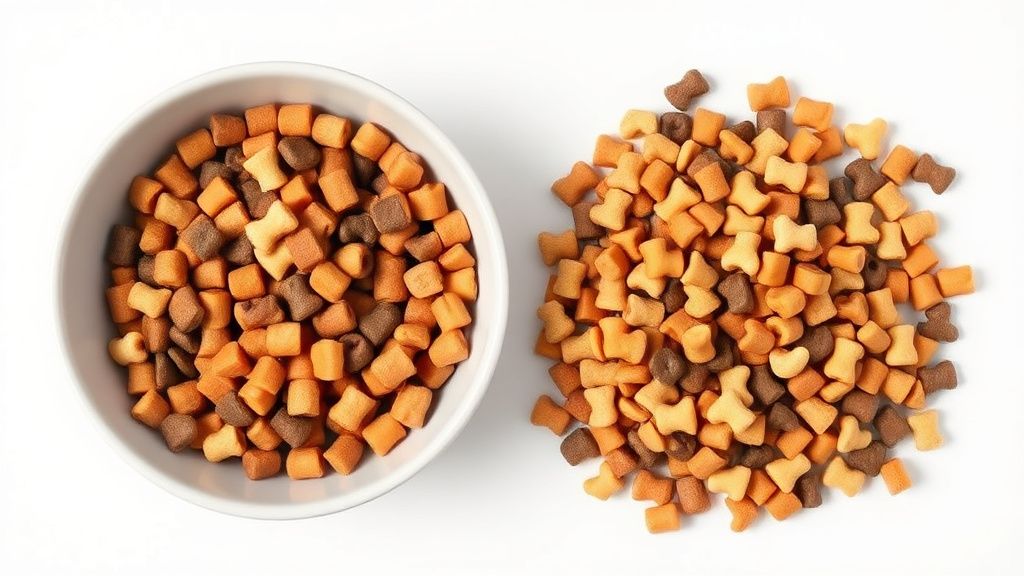
Formulas with a short, simple ingredient list are easier to digest and make it simpler to identify potential triggers. Look for a single, novel animal protein source like salmon, lamb, or duck. These are often gentler than more common proteins like chicken or beef. Avoid foods loaded with artificial flavors, colors, or preservatives, as these synthetic additives can be harsh on digestion.
Highly Digestible CarbohydratesCarbohydrates need to be easy to break down. Sources like white rice, oatmeal, barley, and sweet potato are typically well tolerated. The American Kennel Club notes that beet pulp is an excellent source of fiber that promotes good fecal quality without affecting nutrient absorption.
Probiotics and PrebioticsThis is a game changer for gut health. Live probiotics (like those found in some yogurts) directly add beneficial bacteria to the gut, while prebiotics (like chicory root) act as food for those good bacteria. As one pet parent shared on Dog Food Advisor, "The emphasis on a healthy gut is important to overall health and longevity." A food that includes these supports a balanced digestive environment from the inside out.
Complete and Balanced NutritionEven a sensitive stomach formula must provide all the vitamins, minerals, and nutrients your dog needs. Look for statements from the Association of American Feed Control Officials (AAFCO) confirming the food is complete and balanced for your dog's life stage.
What Are the Top Vet Recommended Foods for 2026?
Based on veterinary panels and expert reviews from sources like PetMD and Forbes Vetted, several brands stand out for their proven results with sensitive dogs. Here are the formulas getting the most consistent recommendations.
Purina Pro Plan Sensitive Skin & StomachThis is frequently called the "go to" mainstream option, and for good reason. It's widely available, vet trusted, and effective. The salmon and rice formula is a top pick. It includes omega fatty acids for skin and coat health, live probiotics for digestion, and is easily digestible. A Reddit user feeding a wolfdog reported, "Our vet recommended it years ago," and their dog loves it. It's a safe, reliable starting point for many dogs.
JustFoodForDogsThis brand represents the fresh dog food category, which can be excellent for sensitive systems. Their recipes are made with whole, human grade ingredients you can actually see. The gentle cooking process preserves nutrients and may be easier to digest than highly processed kibble. While it requires refrigeration, the benefits for a dog with dietary issues can be substantial.
OllieAnother fresh food delivery service highlighted by experts, Ollie creates personalized meal plans based on your dog's profile. This tailored approach means the recipes are designed to be gentle and suitable for your individual dog's needs. The convenience of having a dog food delivery service handle balanced, vet designed meals takes the guesswork out of feeding a sensitive pup.
Air Dried and Alternative FormatsAs noted by FurryFriendTips, if your dog reacts to fillers or synthetic additives, air dried formulas can be a great middle ground between kibble and raw. They are minimally processed, highly palatable, and often easier to digest. Exploring freeze dried dog food or other gentle formats can open up new solutions.
How Should I Transition to a New Sensitive Stomach Food?
Switching foods too quickly is a common mistake that can worsen stomach issues. A slow transition over 7 to 10 days is non negotiable. This gives your dog's digestive enzymes and gut bacteria time to adjust.
Start by mixing 25% of the new food with 75% of the old food for about three days. If all is going well, move to a 50/50 blend for another three days. Then try 75% new to 25% old. Finally, you can offer 100% of the new sensitive stomach formula.
Watch your dog closely during this period. Their stool is your best indicator. The goal is consistently firm stools. If you see a setback, slow the transition down even more. Patience here is key to long term success. Remember, stress can also upset your dog's stomach, so maintaining a calm routine during the switch is helpful. For dogs who get anxious with change, our dog anxiety guide has useful tips.
What Else Can I Do to Support My Dog's Digestive Health?
Food is the foundation, but other factors contribute to a happy gut. Consistency is powerful. Feed your dog at the same times each day and avoid giving table scraps, which can introduce unexpected fats and spices. When you do want to give treats, choose simple, single ingredient options that align with their diet, like a piece of baked sweet potato or a commercial treat made with their protein source.
Ensure your dog has access to fresh, clean water at all times. Proper hydration is critical for digestion. Regular, moderate exercise also helps keep the gastrointestinal tract moving smoothly. Finally, remember that finding the right food might take a couple of tries. What works perfectly for one dog might not work for another. Keep a simple log of what you try and your dog's response; this information is invaluable for you and your veterinarian.
Final Thoughts
Helping your dog overcome a sensitive stomach is one of the most rewarding journeys you can take as a pet owner. It requires some detective work, patience, and close partnership with your vet, but the payoff is immense. A dog free from digestive discomfort is a happier, more energetic, and vibrant companion. You'll see it in their shiny coat, their solid stools, and their playful spirit.
Start with the vet recommended formulas that focus on gentle proteins, probiotics, and digestibility. Transition slowly, observe carefully, and don't get discouraged if the first try isn't a perfect fit. The right diet is out there. By using this guide and leaning on professional advice, you're well on your way to transforming your dog's digestive health and overall well being. Here's to many happy, comfortable meals ahead for your best friend.
Find the Perfect Box for Your Dog
Compare top-rated dog subscription boxes and find the best fit for your pup.
Compare Boxes